All products are independently selected by our editors. If you buy something, we may earn an affiliate commission. Learn More >
If you’ve ever wondered why your espresso sometimes tastes bitter, sour, or perfectly balanced, learning how to taste espresso is the key to understanding why.
Espresso machines can grind, tamp, and extract shots with precision, but there’s one thing they can’t do – taste. That’s where you come in.
Being able to taste espresso properly isn’t just for baristas. It’s a skill that can help any home coffee lover make espresso that tastes better, recognize what’s off in a shot, and fine-tune their brew to get that café-quality flavor at home.
In this guide, we’ll explore what espresso should taste like, the five main tasting elements to pay attention to, and a simple espresso tasting exercise you can try at home to sharpen your palate.
What Does Espresso Taste Like?
If you’ve only ever sipped espresso once and thought, “that’s strong,” you’re not alone. Espresso packs a punch – concentrated coffee flavor, intense aroma, and a rich mouthfeel all in one small cup.
But good espresso isn’t just strong coffee.
A perfect espresso balances sweetness, acidity, and bitterness in a way that makes it complex but smooth.
Here’s how I usually describe it:
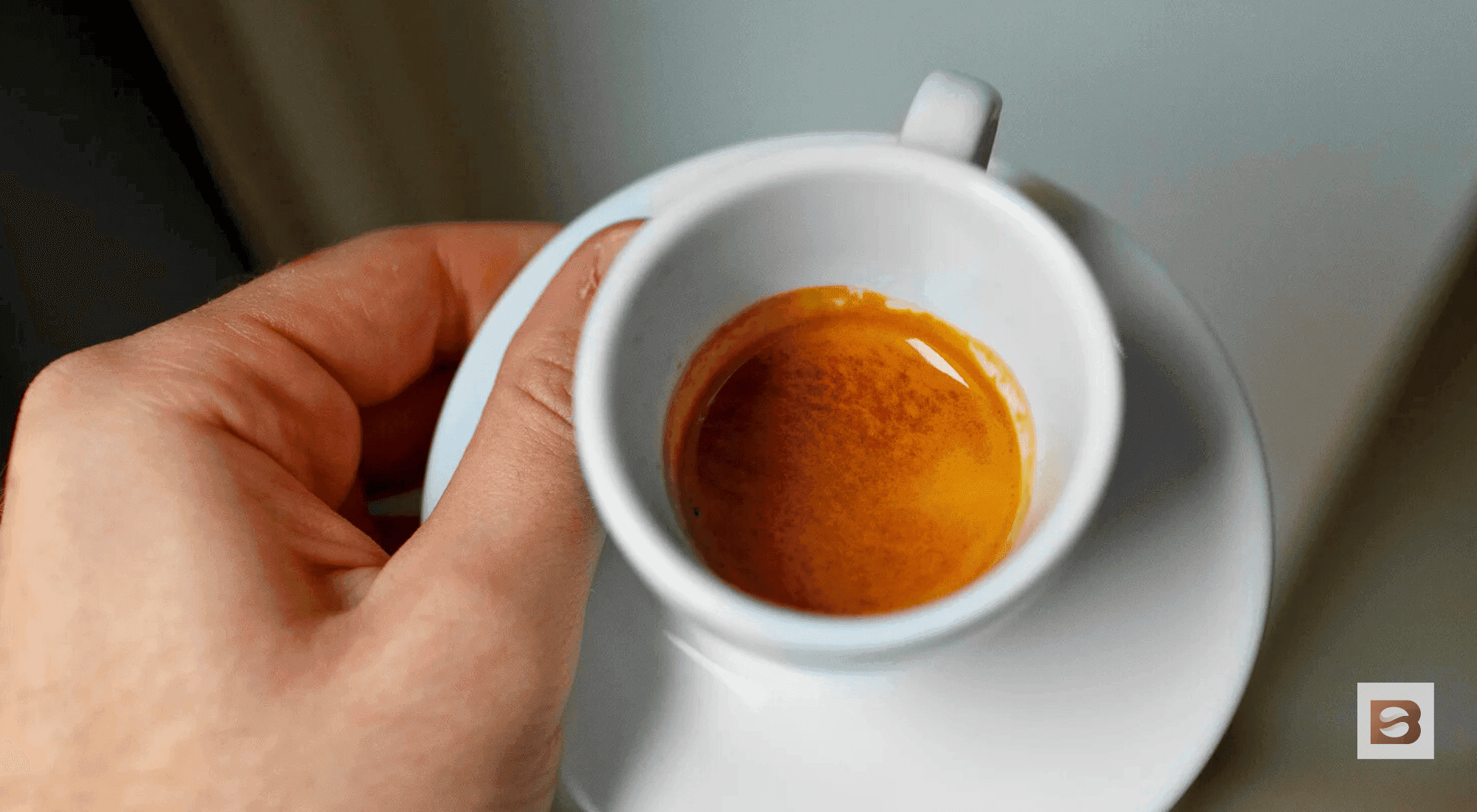
- A well-brewed espresso has a syrupy body, a touch of natural sweetness, a pleasant hint of bitterness, and just enough acidity to make it lively.
- An under-extracted espresso (too short a shot or too coarse a grind) can taste sharp, sour, or even salty.
- An over-extracted espresso (too long or too fine a grind) often turns harsh, bitter, or dry.
The best espresso should taste balanced.
You’ll get hints of caramel, chocolate, nuts, or fruit depending on the coffee beans, roast profile, and extraction time.
Taste is subjective, but once you learn to recognize those patterns, you can tell a good espresso from a bad one instantly.
Why Learning to Taste Espresso Matters
Understanding espresso taste is like learning a new language – once you speak it, you can fix mistakes faster and enjoy coffee on a whole new level.
For baristas, tasting espresso helps identify what went wrong in a shot: maybe the grind is too fine, the dose too high, or the shot ran too long.
For home brewers, it’s the fastest way to stop wasting beans and start making espresso that actually tastes good.
By paying attention to the aroma, flavor, body, acidity, and finish, you’ll start noticing patterns that tell you exactly what’s happening in your espresso machine.
And once you can taste espresso with intent, you’ll realize that every cup reveals something about the roast, the grind, and even the freshness of your beans.
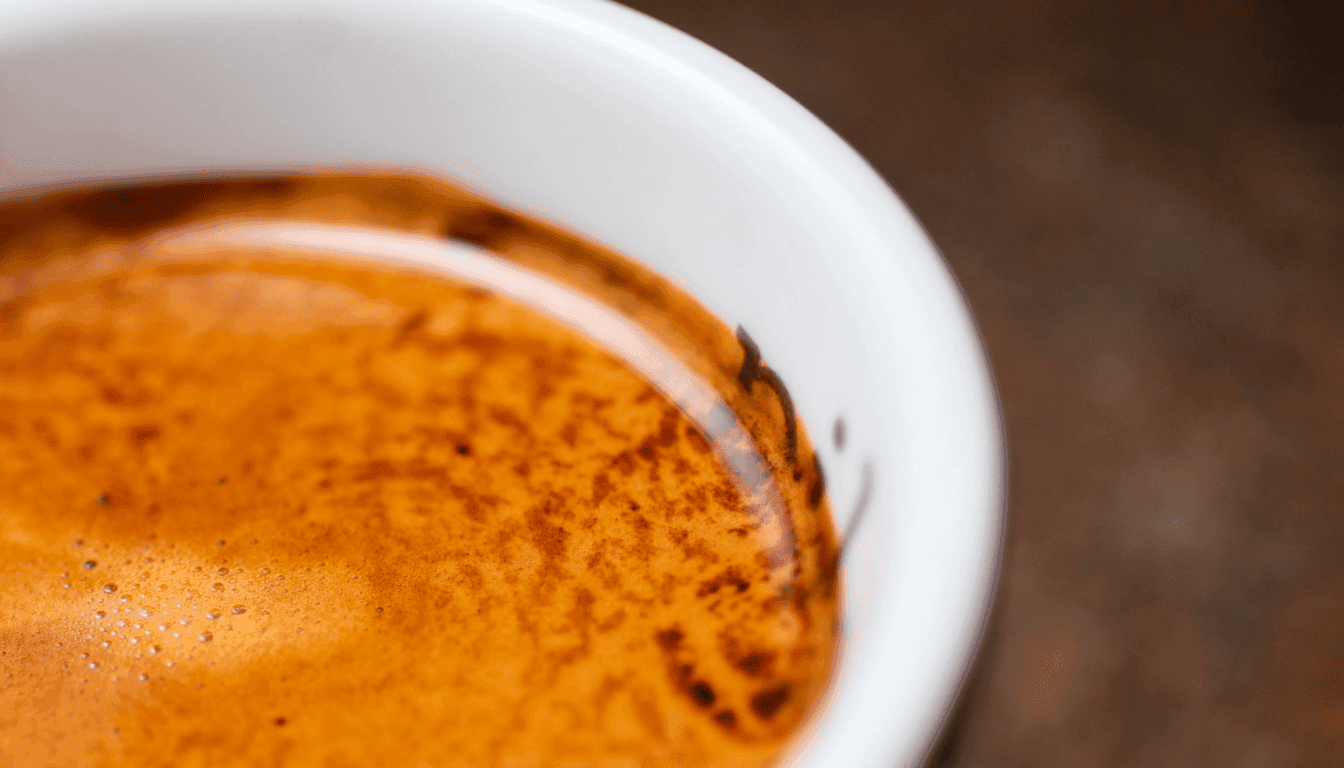
So, I bet you’re wondering how exactly you taste espresso? Let’s take a look.
How to Taste Espresso Step by Step
Tasting espresso properly is about slowing down and paying attention to what’s happening in your cup. You’re not just drinking coffee, you’re analyzing it.
Here are the five main things to focus on when learning how to taste espresso: aroma, body, flavor, acidity, and finish.
Aroma
The first thing you notice before you even take a sip is the aroma. That initial scent tells you more than you might think.
Smell the espresso right after it’s pulled. Is it rich and inviting, or burnt and rubbery? If it smells unpleasant, it’s probably going to taste that way too.
Between 70 to 80 percent of what we call taste actually comes from smell. The tongue picks up sweetness, bitterness, and acidity, but it’s your sense of smell that detects those deeper flavor notes like caramel, fruit, or spice.
If you’re curious, the Coffee Research website has a fantastic breakdown of the 800-plus aromatic compounds that make espresso so complex.
A good espresso should smell warm, slightly sweet, and aromatic. Burnt, smoky, or chemical scents usually mean something went wrong during roasting or extraction.
Body
The body describes how espresso feels on your tongue. It’s the texture or weight of the liquid in your mouth.
To imagine it, think of the difference between skim milk and full cream milk. Skim milk feels light and thin, while full cream milk feels thicker and richer. Espresso works the same way.
A shot with good body feels full and coating, almost like melted chocolate or warm honey. A thin or watery body can mean the espresso was under-extracted or ground too coarse.
When tasting, let the coffee sit on your tongue and notice how it feels as you swirl it around. That texture gives you an important clue about your espresso’s quality.
Flavor
Flavor is where everything comes together. It’s influenced by the coffee beans, the roast level, and how well the espresso was brewed.
Lighter roasts often highlight fruity or floral notes, especially in single origin arabica coffees. Darker roasts lean toward chocolatey, nutty, or smoky flavors. Neither is right or wrong, it’s all about balance.
If your espresso tastes harsh or hollow, it’s likely an extraction issue. Under-extracted coffee can taste sour or salty, while over-extracted espresso becomes bitter and astringent.
Try to describe what you taste in simple terms first. Sweet, nutty, spicy, chocolatey, or earthy are all great starting points.
Over time, you’ll be able to narrow those down to more specific notes like hazelnut or dark chocolate.
Acidity
Acidity gives espresso its liveliness and brightness. It’s not the same as sourness, though the two are often confused.
Think about the crisp snap of a green apple or the tang of a ripe berry. That’s the kind of acidity good espresso should have.
Too much acidity makes the shot taste sharp or sour, while too little leaves it flat and lifeless. Balanced acidity adds depth and dimension, especially in specialty coffee.
A clean, pleasant acidity usually means the espresso was brewed with the right grind size and extraction time, enhancing the overall sensation. Harsh or mouth-drying acidity might mean the shot ran too fast or the beans were roasted too light.
If you want to go deeper into espresso evaluation, the Specialty Coffee Association has a detailed sensory guide that professional tasters use to calibrate their palates.
Finish
The finish, or aftertaste, is what lingers after you swallow the espresso. It’s the final impression, and a big part of what makes an espresso memorable.
A great finish is smooth, sweet, and satisfying. You might taste chocolate, caramel, or subtle fruit notes that stay on your tongue.
If the finish feels dry, bitter, or astringent, that could be a sign of over-extraction or dark roasting taken too far.
A good espresso should leave you wanting another sip, not reaching for a glass of water.
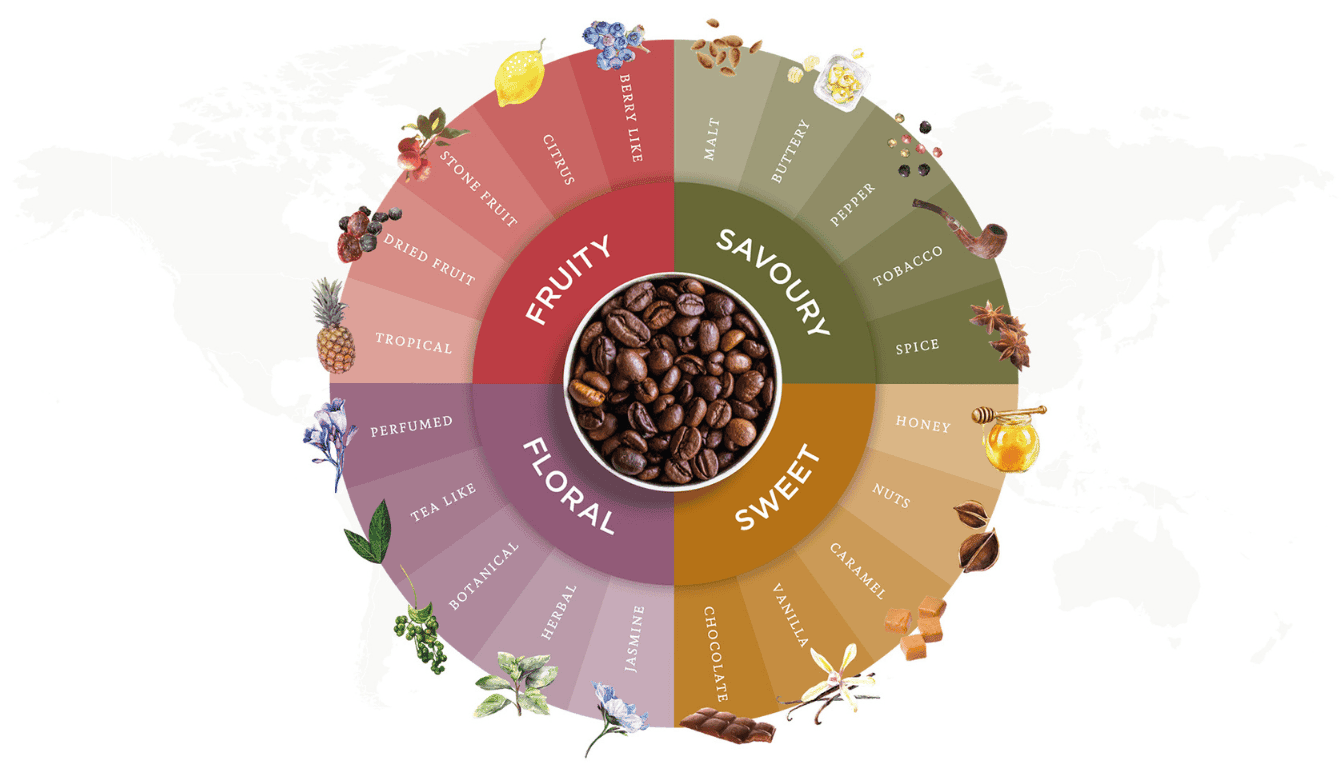
Espresso Flavor Reference Chart
Once you start tasting espresso regularly, you’ll notice that not all shots taste the same.
The flavor of espresso changes depending on the roast level, the coffee’s origin, and how it was extracted.
Here’s a quick guide you can use as a reference when you’re trying to describe espresso flavor at home or in the café.
| Roast Level | Typical Espresso Flavor Notes | Common Mouthfeel | Overall Taste Impression |
|---|---|---|---|
| Light Roast | Fruity, floral, citrus, berry, bright | Lively and crisp | Vibrant with noticeable acidity |
| Medium Roast | Caramel, chocolate, nutty, balanced | Smooth and syrupy | Well-rounded with sweet complexity |
| Dark Roast | Smoky, earthy, cocoa, toasted nuts | Heavy and full-bodied | Bold, bitter-sweet, with low acidity |
Different regions also produce distinct espresso flavor profiles:
- Ethiopia (single origin arabica): Floral and fruity with hints of jasmine or blueberry.
- Colombia: Balanced and sweet with caramel and red fruit notes.
- Brazil: Nutty, chocolatey, and low in acidity.
- Indonesia: Earthy, spicy, and full-bodied with smoky undertones.
If you’re tasting espresso at home, keep a small notebook nearby and jot down what you notice. Writing down your impressions helps you build a mental map of flavors over time, especially when comparing different coffees.
The more you do it, the easier it becomes to recognize what makes each espresso unique.
You’ll start connecting roast, grind, and flavor instinctively, which is exactly how professional baristas fine-tune their shots.
Espresso Tasting Practice: The Salami Shot Method
If you want to train your palate and really understand what’s happening during espresso extraction, the salami shot method is one of the best exercises you can try.
It’s called the salami shot because you’re slicing a single espresso shot into smaller segments, just like slices of salami. Each slice represents a different stage of extraction – from the intense first drops to the weaker, watery tail end.
You don’t need to be a pro barista to do this.
All you need is an espresso machine, six small espresso cups, and a bit of patience.

How to Do It
Dial in your espresso first. Get as close as you can to a normal, well-balanced shot using your usual grind size, dose, and tamp.
- Set out six cups. Line them up in front of your espresso machine.
- Start the shot and time it. As soon as the first drop of espresso hits the cup, start your timer.
- Swap cups every 5 seconds. Gently slide the next cup under the spout while moving the last one aside. Do this until you’ve collected espresso in all six cups.
- Stop the shot around 35 to 40 seconds. This gives you a complete range of extraction phases to taste.
Now, line the cups up in order and start tasting from the first to the last. Take your time and pay attention to how the espresso taste changes from one cup to the next.
What You’ll Notice
- Cup 1–2: Very strong and syrupy, often salty or sharp. This is the early stage, full of concentrated oils and acids.
- Cup 3–4: The sweet spot. Balanced flavor, smooth body, and pleasant aroma – this is where most of the good stuff happens.
- Cup 5–6: Thinner, weaker, sometimes bitter or hollow. This is the over-extracted portion.
By tasting each section, you’ll clearly see how espresso flavor develops throughout extraction.
It’s an eye-opener for new baristas and a fun experiment for home brewers who want to taste the science behind espresso.
Once you’ve done this exercise, you’ll have a new appreciation for how grind size, extraction time, and even the freshness of your beans affect your final cup.
You’ll also have a much better sense of what a perfect espresso should taste like.
Common Espresso Taste Mistakes
Even experienced baristas pull bad shots sometimes.
The key is knowing why your espresso tastes off so you can fix it next time. Most espresso problems come down to extraction, which is how much flavor you pull from the coffee grounds.
Here’s a quick reference table that breaks down the most common espresso taste issues, what causes them, and how to fix them.
| Espresso Taste Problem | Likely Cause | How to Fix It |
|---|---|---|
| Sour or Sharp Espresso | • Grind too coarse • Shot too short (under 20s) • Water too cool | • Use a finer grind • Run shot slightly longer • Raise brew temperature |
| Bitter or Dry Espresso | • Grind too fine • Shot too long (over 35s) • Water too hot • Beans too dark | • Use a coarser grind • Shorten shot time (25–30s) • Lower water temp • Try a lighter roast |
| Flat or Dull Espresso | • Old or stale beans • Uneven grind • Poor tamp • Bad water | • Use fresh beans • Grind before brewing • Tamp evenly • Use filtered water |
Understanding These Espresso Flaws
Sour or sharp espresso usually means the water didn’t have enough time to extract flavor from the coffee. Think of it like undercooked pasta – it’s still edible, but it’s missing texture and depth.
Adjusting grind and shot time usually solves it fast.
Bitter or dry espresso is the opposite problem. Too much extraction pulls out harsh, woody compounds that overpower the sweetness.
Even a few seconds too long can make your espresso taste dry and burnt.
Flat espresso is often a freshness issue. Old beans or poor water quality can rob your shot of complexity. You’ll still get caffeine, but not much character.
Once you start tasting with intent, you’ll recognize these patterns quickly. Each one tells you exactly how to tweak your next shot for better flavor.
Tips to Improve Espresso Taste at Home
Once you know how to taste espresso, improving it becomes much easier. A few simple tweaks to your beans, grind, and extraction can completely change the way your coffee tastes.
Use Fresh, Quality Coffee Beans
No amount of skill or fancy equipment can save old coffee. Freshly roasted beans make the biggest difference in espresso taste.
Look for roast dates instead of expiration dates and try to use beans within three to four weeks of roasting.
Single-origin arabica beans tend to produce more complex espresso flavor, while blends with a small percentage of robusta add extra crema and body.
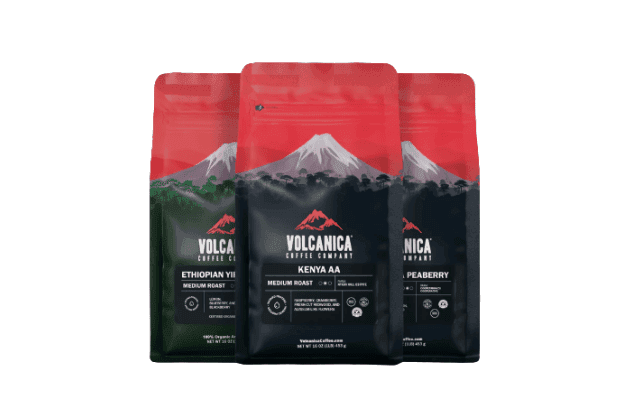
Volcanica – Essential Coffee Bundle
The Essential Coffee Bundle includes three best-selling coffees: Ethiopian Yirgacheffe, Kenya AA, and Costa Rican Peaberry, each available in 16 ounces.
Dial In Your Grind Size
Your grinder has more impact on espresso flavor than most people realize. A grind that’s too coarse will under-extract, producing a sour or salty taste. Too fine, and you’ll get bitterness and dryness.
Start by adjusting your grinder in small increments, one notch at a time. The sweet spot usually gives you a balanced shot between 25 and 30 seconds with rich crema and a syrupy texture.
If you’re using a manual grinder, make sure it’s consistent and capable of fine espresso grinds. Inconsistent particle size can ruin even the best coffee beans.
Watch Your Extraction Time
Extraction is where the magic happens. It determines how much flavor you pull from the ground coffee.
For most espresso machines, a balanced shot runs between 25 and 30 seconds. Shorter shots tend to taste acidic or thin, while longer ones can taste harsh or burnt.
Keep track of your extraction time and adjust your grind to hit that sweet spot for a quality espresso. Once you’ve dialed it in, consistency is key.
Control Your Water Quality and Temperature
Water makes up over 90 percent of espresso, so it plays a massive role in flavor. Hard water can make espresso taste bitter, while overly soft or distilled water often leads to flat coffee.
Use filtered water whenever possible and aim for a brewing temperature between 90 and 96°C. Water that’s too hot extracts harsh compounds, and water that’s too cool leads to sourness.
Keep Your Equipment Clean
Old coffee oils and residue can cling to your espresso machine, filter basket, and portafilter, creating unpleasant bitterness in every shot.
Rinse your portafilter after each use, wipe the shower screen, and backflush your machine regularly. A clean espresso machine produces a cleaner-tasting shot.
Taste and Take Notes
If you really want to get better, start a simple tasting journal. Write down what you taste after each shot – aroma, body, flavor, acidity, and finish.
Over time, you’ll see patterns that help you connect what you taste to what’s happening in your espresso extraction. That’s the fastest way to go from guessing to confidently brewing espresso that actually tastes good.


Final Thoughts
Tasting espresso isn’t just a skill for baristas, it’s how you truly get to know your coffee. Once you learn what to look for in aroma, flavor, acidity, and finish, you’ll start tasting espresso in a whole new way.
At first, it might feel tricky to describe what you’re sensing.
With practice, your palate sharpens, and you’ll quickly tell the difference between a sour shot, a bitter one, and that perfect espresso that tastes balanced, sweet, and smooth.
Even after years of tasting espresso, I still find new flavors hiding in a simple shot. That’s what makes coffee so rewarding, there’s always something more to discover.
Keep experimenting, take notes, and trust your senses. The more attention you give to each cup, the better your espresso will taste – whether you’re behind a café counter or brewing at home before work.