All products are independently selected by our editors. If you buy something, we may earn an affiliate commission. Learn More >
If you’ve ever opened your fridge to reach for the milk and found nothing but an empty shelf, you know the feeling.
But here’s the thing. That can of evaporated milk sitting at the back of your pantry, the one you bought for a recipe six months ago and completely forgot about, might just save your morning.
I’ve been making coffee professionally for over two decades, and evaporated milk is one of those ingredients that doesn’t get nearly enough credit. It’s not a compromise.
Used correctly, it produces a cup that’s richer and creamier than what most people get from regular milk, and it comes with a shelf life that puts fresh dairy to shame.
So, can you use evaporated milk in coffee? Yes, and once you understand what it actually does to your cup, you might start keeping a few cans in stock on purpose.
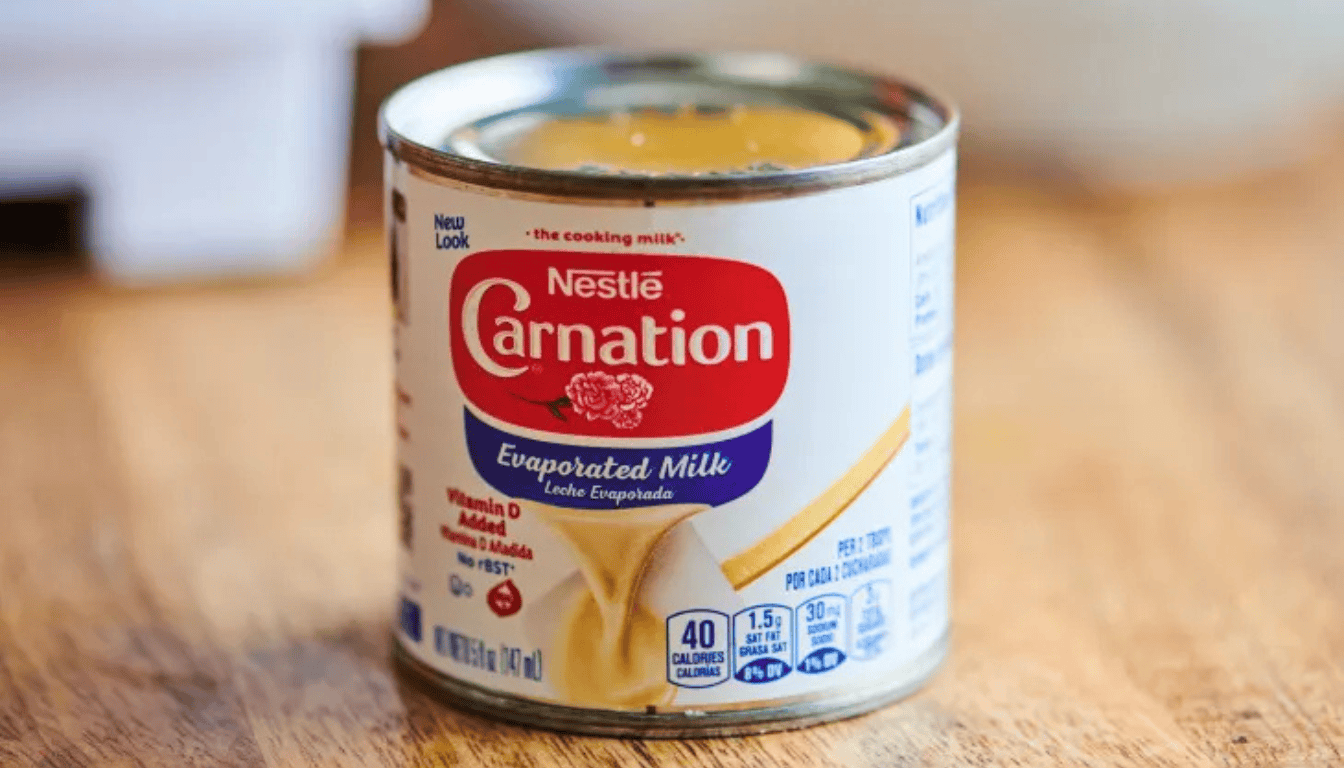
What Is Evaporated Milk, Exactly?
Evaporated milk is made by heating fresh cow’s milk until roughly 60% of its water content has been removed. What’s left gets homogenized, sealed into cans, and sterilized.
The result is a thick, concentrated dairy product with a water content far lower than regular milk.
That heating process does something interesting to the flavor.
The proteins and natural sugars in the milk undergo enough heat exposure to develop a subtly caramelized, slightly cooked taste. It’s not dramatic, but it’s there, and it’s part of what makes evaporated milk coffee taste different from your standard cup with a splash of semi-skimmed.
Because it’s shelf-stable, unopened cans can sit in your cupboard for up to two years. That long shelf life makes it one of the most practical dairy products you can stockpile.
How Evaporated Milk Changes Your Coffee
The difference in your cup is more noticeable than you’d expect. Evaporated milk adds a creaminess and body that regular milk simply can’t match, because you’re dealing with a far more concentrated product. Less water, more milk solids, richer result.
That slightly caramelized flavor I mentioned works particularly well with medium and dark roasts.
The natural sweetness of the evaporated milk softens bitterness without masking the coffee itself. With a lighter, more delicate roast though, it can overpower the more nuanced notes in the cup.
One thing worth knowing: there is a faint “canned” taste to evaporated milk.
Most people don’t find it off-putting, especially once it’s mixed into coffee, but it’s worth being aware of before you pour half a can in.
How to Use Evaporated Milk in Coffee
Adding evaporated milk to your coffee isn’t complicated, but getting the ratio right makes all the difference. Because the water content is so much lower than regular milk, you need far less than you’d normally use.
For a standard mug of hot coffee, start with one to two tablespoons.
That’s usually enough to add creaminess without overwhelming the brew. You can always add more, but it’s hard to walk back once you’ve poured it.
A few practical ways to use it:
- Hot coffee: Stir in one to two tablespoons directly. No preparation needed, just pour.
- Iced coffee: It blends beautifully over ice and holds its texture well in cold drinks.
- Diluted to replace regular milk: Mix equal parts evaporated milk and water, and you’ve got something close to whole milk. This works well if you run out of milk and need a straight substitute.
If you want to make coffee with evaporated milk closer to a café-style drink, try warming the milk slightly before adding it.
It incorporates more smoothly into hot coffee and brings a little extra richness.


Evaporated Milk vs Condensed Milk in Coffee
This is where a lot of people get confused, and it’s worth clearing up. Both evaporated milk and condensed milk go through the same evaporation process to remove water from whole milk, but they are very different products.
Evaporated milk is unsweetened. Condensed milk, sometimes called sweetened condensed milk, has a large amount of sugar added after evaporation.
We’re talking 40 to 50% sugar by content, which is why it has that thick, syrupy consistency.
So which one belongs in your coffee? That depends entirely on what you want.
If you prefer control over sweetness and want to add sugar separately, evaporated milk is the right call. If you want a rich, sweet, dessert-like coffee with no extra steps, condensed milk delivers that in one pour.
The most famous example of condensed milk or evaporated milk in coffee comes from Vietnam. Cà phê sữa đá, Vietnamese iced coffee, is made by brewing strong coffee through a small metal drip filter directly over sweetened condensed milk, then pouring it over ice.
The result is intensely sweet, thick, and deeply satisfying.
It’s one of the most well-known coffee recipes in the world built around canned milk, and it’s worth trying at home even if you’ve never made it before.
Can Evaporated Milk Curdle in Coffee?
Yes, it can, and it’s more likely than with regular milk. The reason is simple: evaporated milk is more concentrated, so the proteins are more reactive to both heat and acidity.
Very hot, highly acidic coffee creates the conditions for curdling.
Darker roasts tend to be less acidic than light roasts, so if you’re regularly using evaporated milk, brewing with a darker roast gives you a bit more room to work with.
To avoid curdling altogether:
- Let your coffee cool for 30 to 60 seconds before adding the evaporated milk.
- Add the milk slowly rather than pouring it in all at once.
- Give the can a good shake before opening, as the contents can separate during storage.
Curdling doesn’t mean the coffee is off or unsafe to drink, but it does affect the texture. A few seconds of patience after brewing usually prevents it.

Volcanica Coffee Lover Gift Box
The perfect gift box for the average avid coffee drinker, this gift box includes the best-selling products all in one package. Explore the taste of favorite coffees from around the world from the comfort of home.
Is Evaporated Milk a Good Substitute for Coffee Creamer?
As a substitute for regular milk or creamer, evaporated milk is genuinely good, and in some ways better.
Commercial coffee creamers are often loaded with processed ingredients, artificial flavors, and added sugar. Evaporated milk is a straightforward canned dairy product: milk, and sometimes a stabilizer or two.
The creaminess you get from evaporated milk is also more natural than what you get from a powdered or liquid creamer.
It behaves more like real milk in the cup and doesn’t leave that artificial aftertaste that some creamers do. From a practical standpoint, keeping a few cans in your pantry means you always have a creamer at home without worrying about refrigeration.
Once opened, it keeps for five to six days in the fridge, so you can use one can across multiple brews during the week.
Final Thoughts
Can you use evaporated milk in coffee? Absolutely. It produces a richer, creamier cup than regular milk, works across hot coffee, iced coffee, and even specialty coffee recipes, and it’s one of the most useful things you can keep in your pantry for those moments when fresh milk isn’t an option.
Start with a tablespoon or two, use a slightly cooler brew to avoid curdling, and don’t be surprised if you find yourself reaching for the can even when the fridge is fully stocked.