

All products are independently selected by our editors. If you buy something, we may earn an affiliate commission. Learn More >
If you’ve ever gone down the rabbit hole of buying a coffee grinder, you’ve probably stumbled across the debate: conical vs flat burrs.
Some folks swear one makes coffee taste brighter, others argue the opposite, and plenty of baristas will tell you it’s all personal preference.
The truth?
Both types of burrs will give you a far better grind than any blade grinder ever could. But they do have quirks – different shapes, different ways of grinding, and small differences in flavor and usability.
So, let’s break it down in plain English.
By the end, you’ll know how conical and flat burr grinders actually work, how they affect your coffee, and which one makes sense for your style of brewing.
What Makes a Burr Grinder Different?
Before we compare burr shapes, it helps to understand why burr grinders are so popular in the first place.
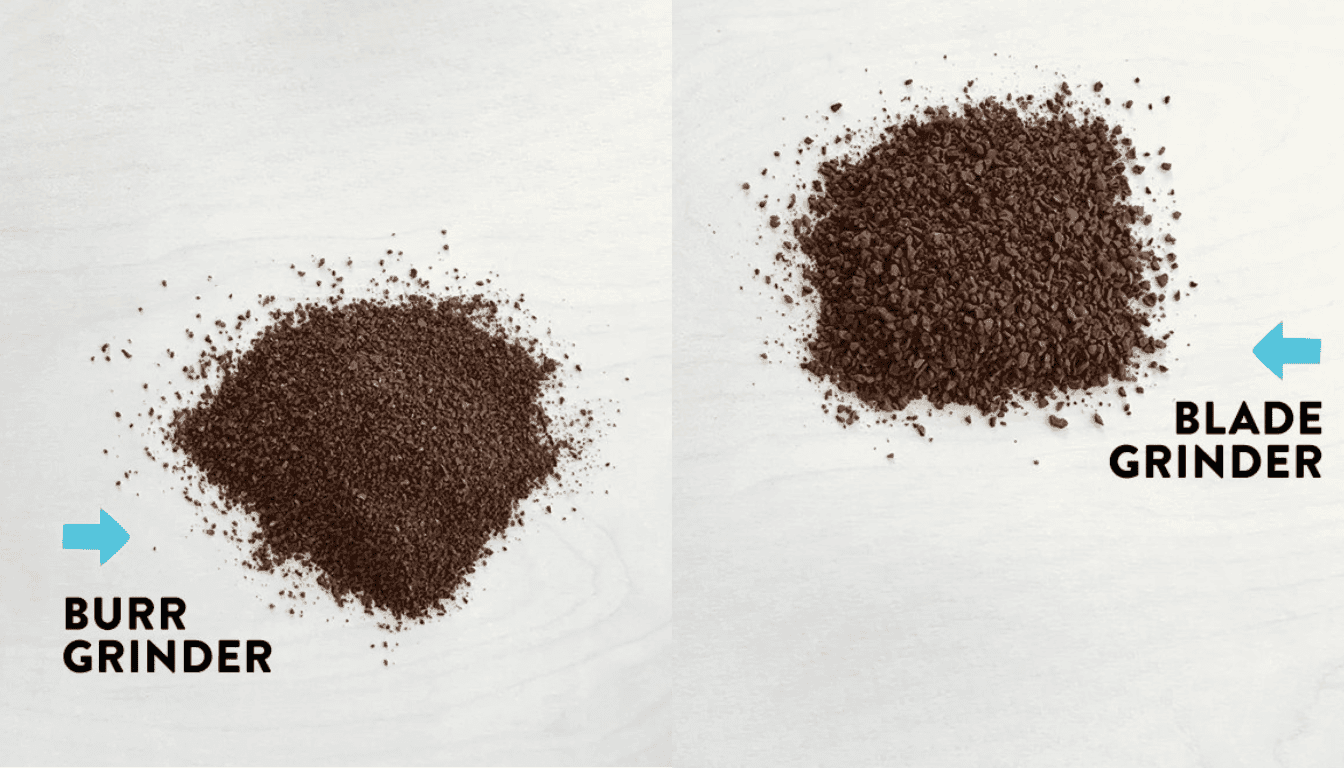
Blade grinders chop beans with spinning metal blades. They’re cheap, but they’re unpredictable – some beans end up as powder, others as chunky boulders.
That uneven grind makes it almost impossible to brew a balanced cup.
Burr grinders work differently. They use two abrasive surfaces (the burrs) that crush beans into uniform pieces. You control the grind size by adjusting the distance between the burrs.
Want espresso-fine? Close the gap. Brewing French press? Widen it.
This is where burr geometry comes into play.
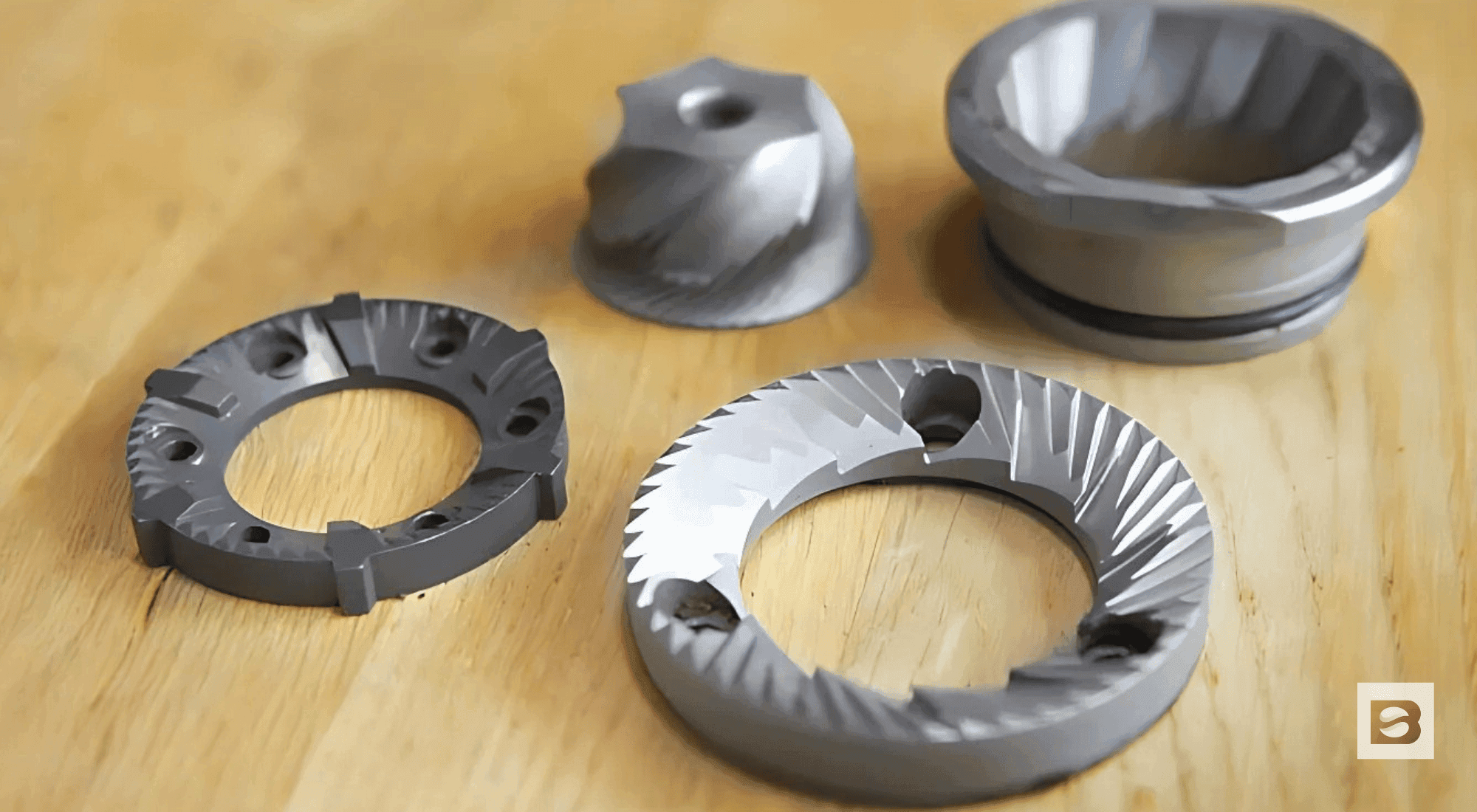
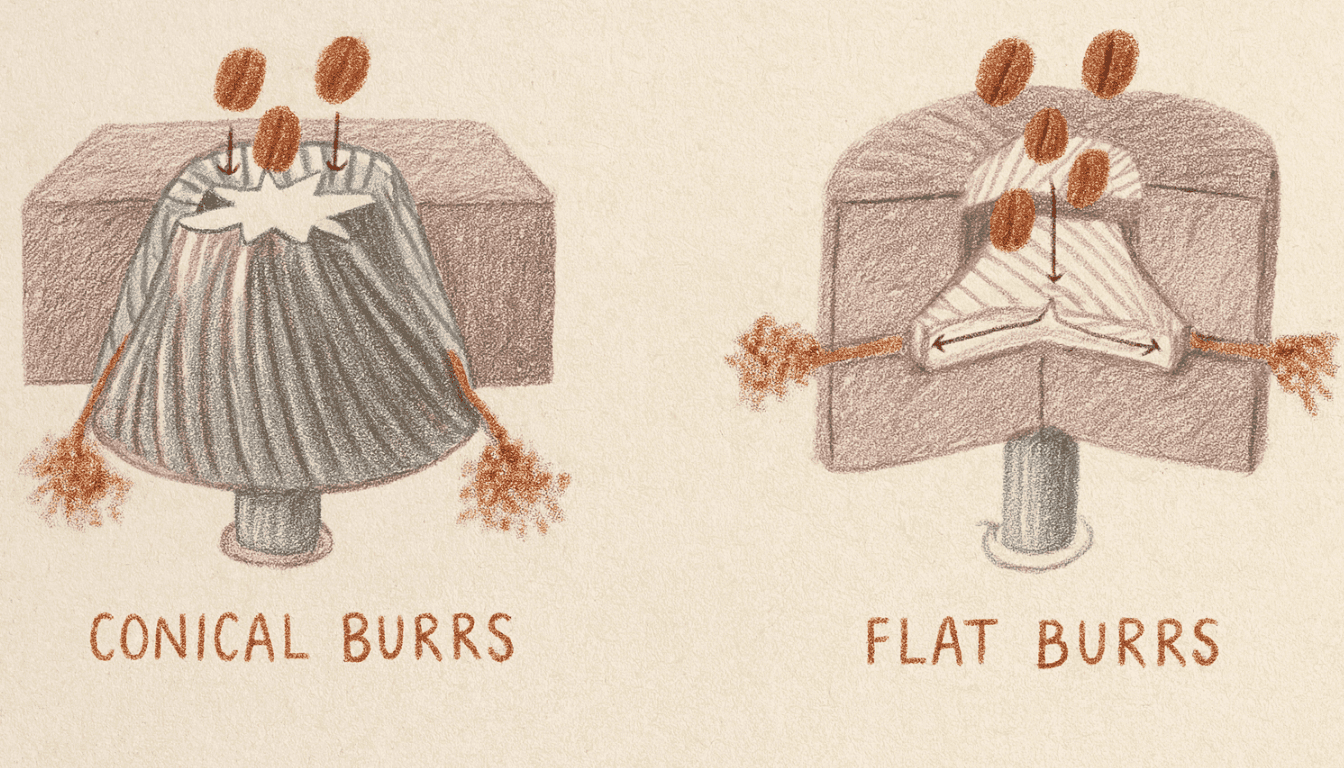
Flat burrs sit horizontally and grind beans between two flat rings. Conical burrs are angled, with one cone inside another, feeding beans downward.
The shape affects consistency, speed, heat, and even how much coffee gets trapped inside.
In short, all burr grinders beat blade grinders, but the choice between conical and flat is about which trade-offs matter most to you.
What Is a Conical Burr Grinder?
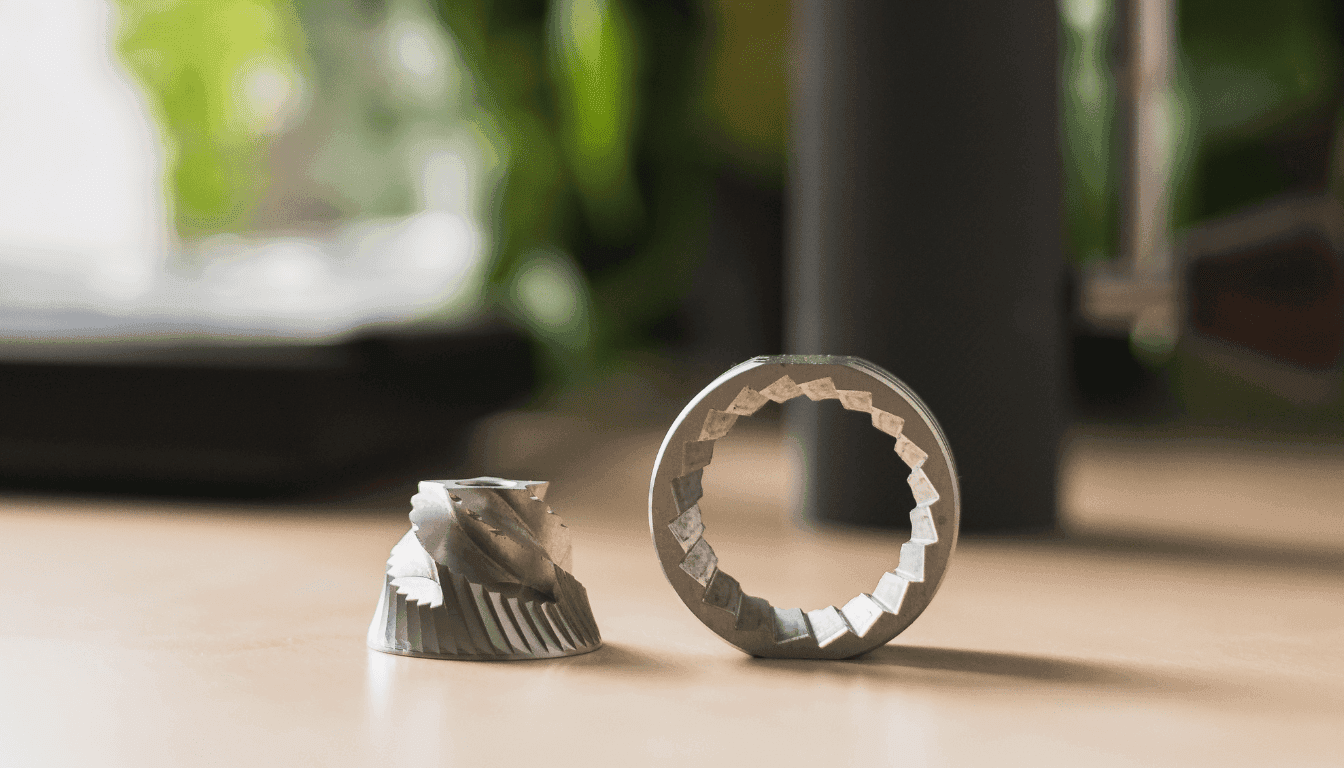
Conical burrs are shaped like, you guessed it, a cone. One burr sits inside another, angled to feed the beans downward while grinding.
The design is simple but effective, and it’s the reason you’ll see conical burrs in many home grinders, especially manual models.
Because of the vertical path, coffee grounds tend to flow straight out with little resistance.
That means less clogging and less stale coffee hiding inside the burr set of the machine. Conical grinders also spin at a slower speed, which makes them quieter and generates less heat.
Less heat is a good thing, since friction can burn off delicate oils and dull the flavor of your coffee.
There are some trade-offs.
Conical burr grinders are usually more expensive than flat burrs of similar quality.
And while they’re consistent enough for most brew methods, some coffee pros argue that conical burrs aren’t quite as precise at producing super-uniform grounds for high-end espresso.
So who are they best for?
If you brew pour-over, French press, or just want a solid all-rounder for home use, a conical burr grinder is hard to beat.
What Is a Flat Burr Grinder?
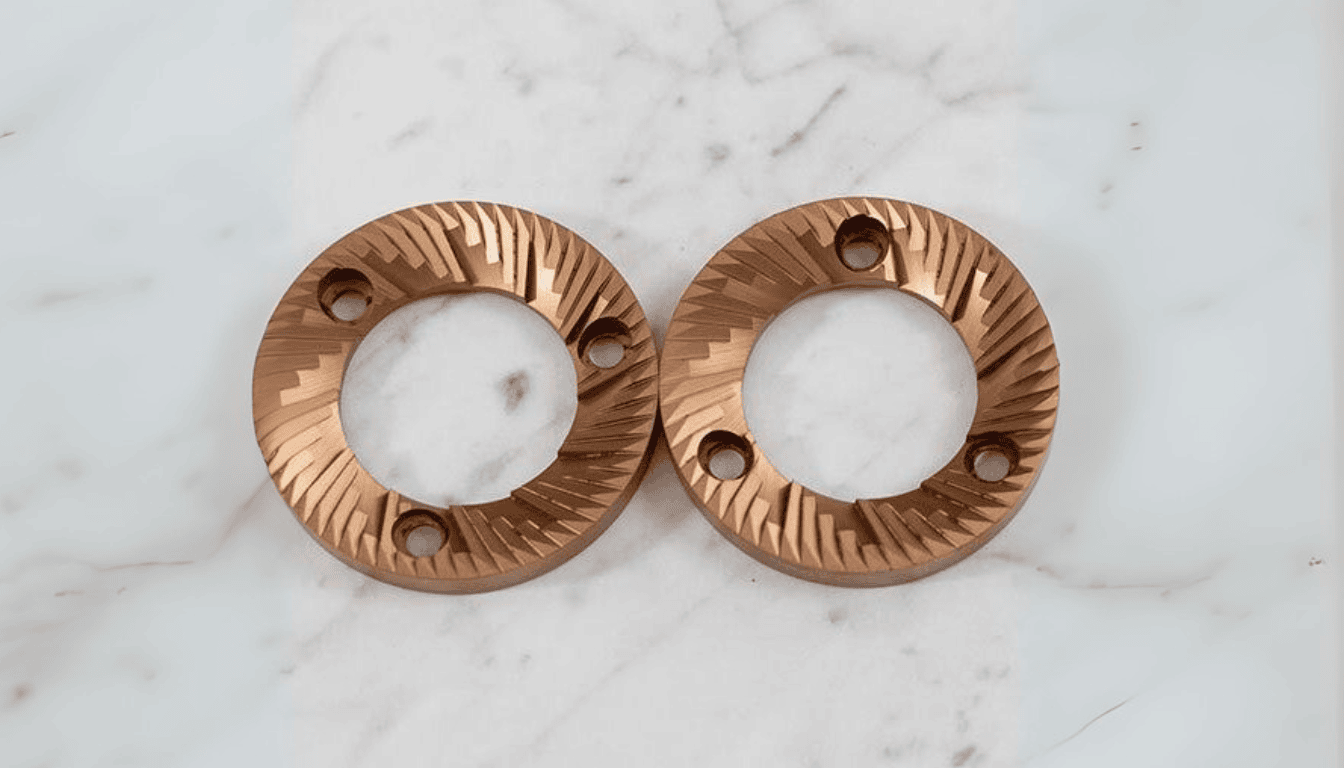
Flat burrs look different right from the start.
Instead of a cone inside another cone, you get two flat rings that sit horizontally. One burr faces up, the other faces down, and the beans are crushed between the two.
Because of this design, flat burrs usually grind beans with extreme precision. The grounds tend to be very uniform, which is why many espresso enthusiasts prefer them.
Consistency at that level makes it easier to “dial in” a shot and repeat it over and over.
But there are a few drawbacks worth knowing.
Flat burrs often spin faster, which means more heat and noise compared to conical burrs. They also hold on to more coffee grounds inside the grinder – called retention.
Those leftover grounds can go stale and affect the taste of your next brew if you don’t clean regularly. Static is another annoyance, since grounds can stick to hoppers and collection bins.
Still, for anyone serious about espresso, a flat burr grinder is usually the top pick for achieving fine grounds.
They shine when precision matters and every gram of coffee has to be consistent.
Grind Consistency and Flavor: Does Burr Shape Affect Taste?
Flat burrs are known for their consistency.
Because the grounds are so uniform, espresso shots often taste cleaner and more defined. You might pick up sharper notes of fruit or brighter acidity, which is why many specialty cafés use flat burr grinders behind the bar.
Conical burrs, on the other hand, tend to produce a slightly wider range of particle sizes.
That sounds like a flaw, but it can actually give your coffee more body and sweetness. Many people find this makes pour-over and French press coffee taste more rounded and forgiving.
To put it simply:
- Flat burr grinders – Best for clarity, brightness, and highlighting subtle tasting notes.
- Conical burr grinders – Better for balance, sweetness, and fuller body in the cup.
- Home brewers – Either style will brew great coffee, but flat burrs shine with espresso while conicals excel with manual brew methods.
So, which one is better for flavor?
Neither burr type wins outright, as each has its unique advantages.
Flat burrs emphasize clarity and precision, while conical burrs highlight balance and body. Unless you’re chasing competition-level espresso, both styles will brew delicious coffee at home.
Heat, Retention, and Waste: Why It Matters
Another common question is, “Do flat burr grinders waste more coffee?” The short answer is yes, but there’s more to it.
Because flat burrs sit horizontally, grounds often get trapped between the burrs and in the chute. This is known as retention.
Over time, those trapped grounds go stale and can mix with your fresh coffee, dulling the flavor. It also means you’ll lose a gram or two every time you grind, which adds up if you’re brewing daily.
Conical burrs handle this better. Since beans travel straight down through the burrs, there’s less chance for grounds to get stuck.
A quick brush or a tap usually clears everything out. That means less waste and less risk of old coffee sneaking into your cup.
Heat is another factor.
Flat burrs typically spin faster, which creates more friction and can slightly warm the coffee beans during grinding.
It’s rarely enough to ruin your brew, but sensitive palates may notice a difference in flavor clarity.
Conical burrs spin slower and stay cooler, making them a safer bet if you’re worried about heat stripping away aromatic oils.
In short, flat burrs demand more cleaning and waste a bit more coffee, while conical burrs are generally cleaner and cooler to use.
Which Burr Grinder Is Better for Home Use?
So, which should you pick for your kitchen? It depends on how you brew and what matters most to you.
If espresso is your passion, a flat burr grinder will give you the consistency you need to pull shot after shot with predictable results. That’s why you’ll often see flat burrs in cafés and commercial espresso machines.
For most home brewers, though, a conical burr grinder is the easier choice. They’re quieter, cleaner, and less fussy.
If you’re making pour-over, French press, or drip coffee, you’ll enjoy the forgiving nature of conical burrs – and you won’t lose precious grams of coffee to retention.
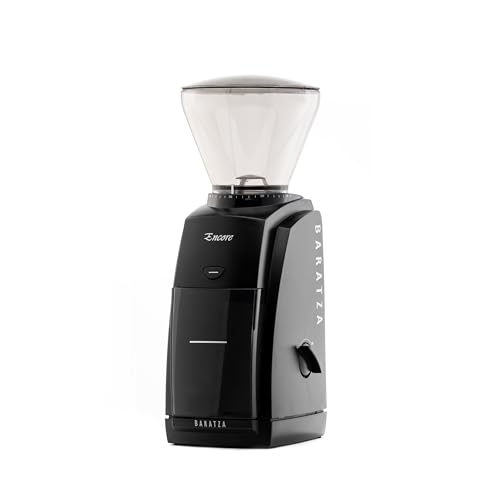
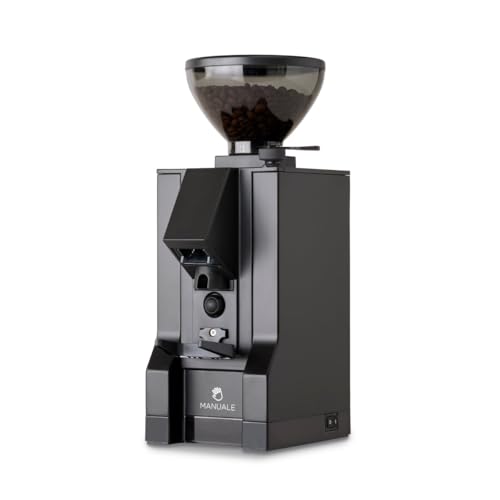
Manual grinders almost always use conical burrs, and they’re great if you want an affordable way to grind fresh beans or need something portable for travel.
In the end, the “better” burr grinder isn’t about one being superior to the other.
It’s about choosing the burr shape that matches how you like to brew at home.
Conical vs Flat Burr: Side-by-Side Comparison
| Flat And Conical Feature | Conical Burr Grinder | Flat Burr Grinder |
|---|---|---|
| Burr Shape | Cone-shaped burr inside another cone | Two flat, horizontal rings |
| Grind Consistency | Slight variation, forgiving, good body | Very uniform, ideal for espresso clarity |
| Flavor Profile | Emphasizes sweetness and balance | Highlights brightness and definition |
| Heat Build-Up | Spins slower, stays cooler | Spins faster, more heat and friction |
| Noise Level | Quieter | Louder |
| Retention/Waste | Minimal retention, easy to clean | Higher retention, needs more cleaning |
| Price Range | Often more expensive | Usually more affordable |
| Best For | Home brewers, pour-over, French press, manual grinders | Espresso enthusiasts, café-style consistency |
Final Thoughts
At the end of the day, both flat and conical burr grinders are a huge step up from blade grinders. Either one will give you a consistent grind and a better-tasting cup of coffee.
If you’re mainly brewing espresso and want maximum precision, a flat burr espresso grinder might be the better fit.
But for everyday home coffee brewing – whether it’s pour-over, French press, or just a dependable morning filter coffee pot – a conical burr grinder is often the simpler, cleaner choice.
Personally, I lean toward conical burrs for home use.
They waste less coffee, run quieter, and deliver more than enough consistency for the way most of us brew. But whichever style you choose, the real win is grinding fresh coffee beans. Once you start, you’ll never go back to pre-ground coffee again.



Thanks for the information regarding flat and conical burr grinders. Answered all my questions. Who makes the best conical grinder?
Hey Ron, glad I was able to answer some of your questions. I recommend taking a looking at this article https://www.beanground.com/best-coffee-grinder/ I have tried and tested loads of grinders and have featured some conical grinders on the list. If you’re looking for a good all rounder the Baratza Virtuoso Conical Burr Coffee Grinder is a decent buy.