All products are independently selected by our editors. If you buy something, we may earn an affiliate commission. Learn More >
Most mornings, my coffee routine happens on autopilot. Grinder on, kettle heating, eyes half open. Then I reach for a syrup bottle and pause for a second longer than I should. Monin or Torani – same coffee, but potentially a very different outcome.
If you’re making coffee at home and playing around with flavored coffee, you’ve probably ended up with these two syrup brands on your counter at some point.
They show up in coffee shops, cafés, and just about every TikTok latte recipe going. But once the novelty wears off, the real question kicks in.
Which one actually makes your coffee taste better? Should you choose one over the other? Well, let’s find out.
What You’re Really Choosing Between With These Syrup Brands
On paper, this looks like a simple monin vs torani comparison. Two popular brands, hundreds of syrup flavors, glass bottles, pumps that never quite line up with your mug.
In real life, the choice is less about labels and more about behavior. How sweet you want your morning coffee. How loud you want the flavor to be. Whether you want the syrup to sit quietly in the background or take center stage.
Once you see it that way, the decision gets easier.
How Monin and Torani Behave Once They Hit Your Coffee
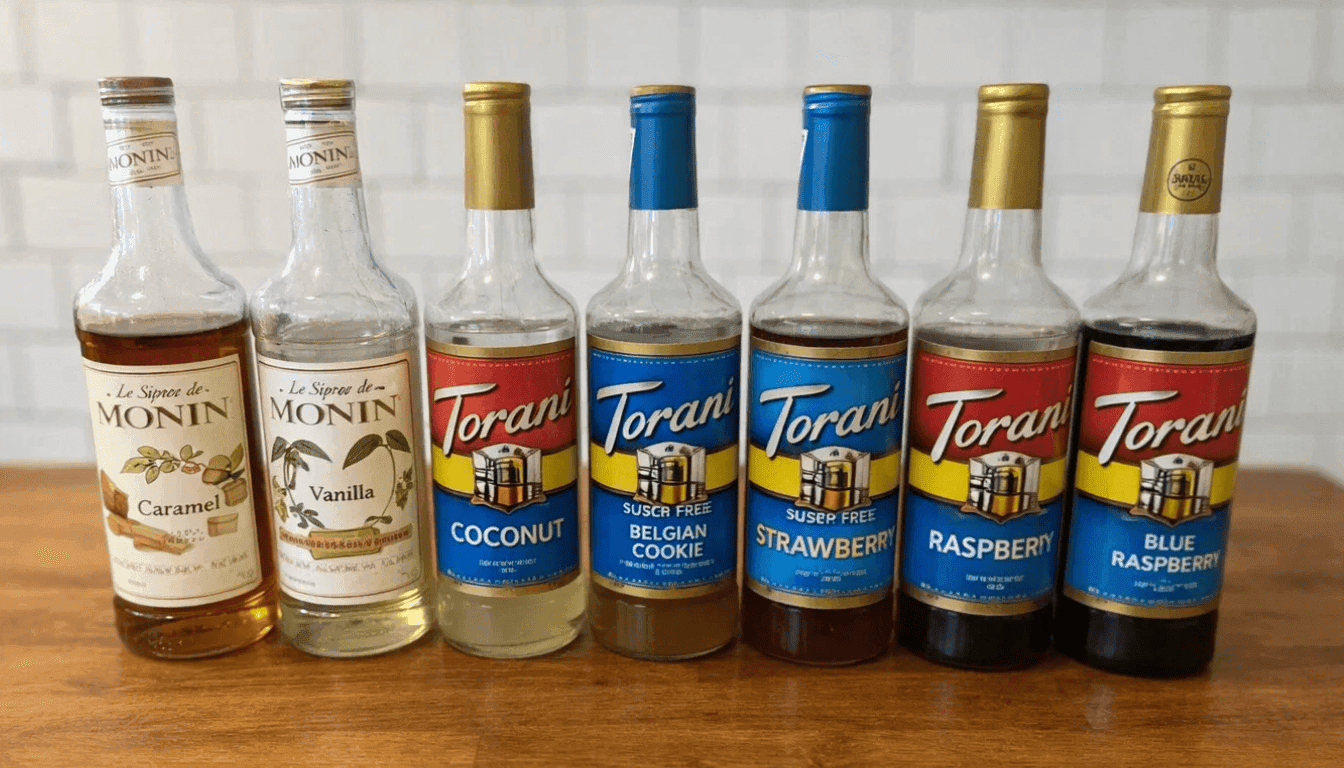
When I add Monin syrup to hot coffee or a latte, it tends to melt into the drink. The sweetness feels rounded.
The flavor spreads evenly. Your coffee still tastes like coffee, just gently nudged toward vanilla, caramel, or whatever you’re in the mood for.
Torani behaves differently. It shows up fast. The sweetness is more obvious, especially in milk based drinks and cold brew coffee.
That can be a good thing when you want bold flavor without measuring or fussing. It can also overpower lighter roasts if you’re heavy handed with the coffee syrup.
Taste and Flavor Profiles, What Your Taste Buds Notice First
Flavor descriptions on bottles are rarely helpful, so let’s talk about how these syrups actually taste in a cup.
With vanilla syrup, Monin usually comes across smoother and more natural, closer to vanilla bean than dessert topping. It works well when you want a latte that feels calm and balanced.
Torani’s vanilla leans sweeter and more pronounced. If you like tasting the flavored syrup clearly with every sip, you’ll probably prefer it.
That’s why it shows up so often in coffee shop drinks designed to taste familiar and comforting.
Hazelnut is another good example. Monin’s hazelnut tends to feel toasted and subtle. Torani’s hazelnut pops harder, which works especially well in cold brews or iced drinks where flavors can get muted.
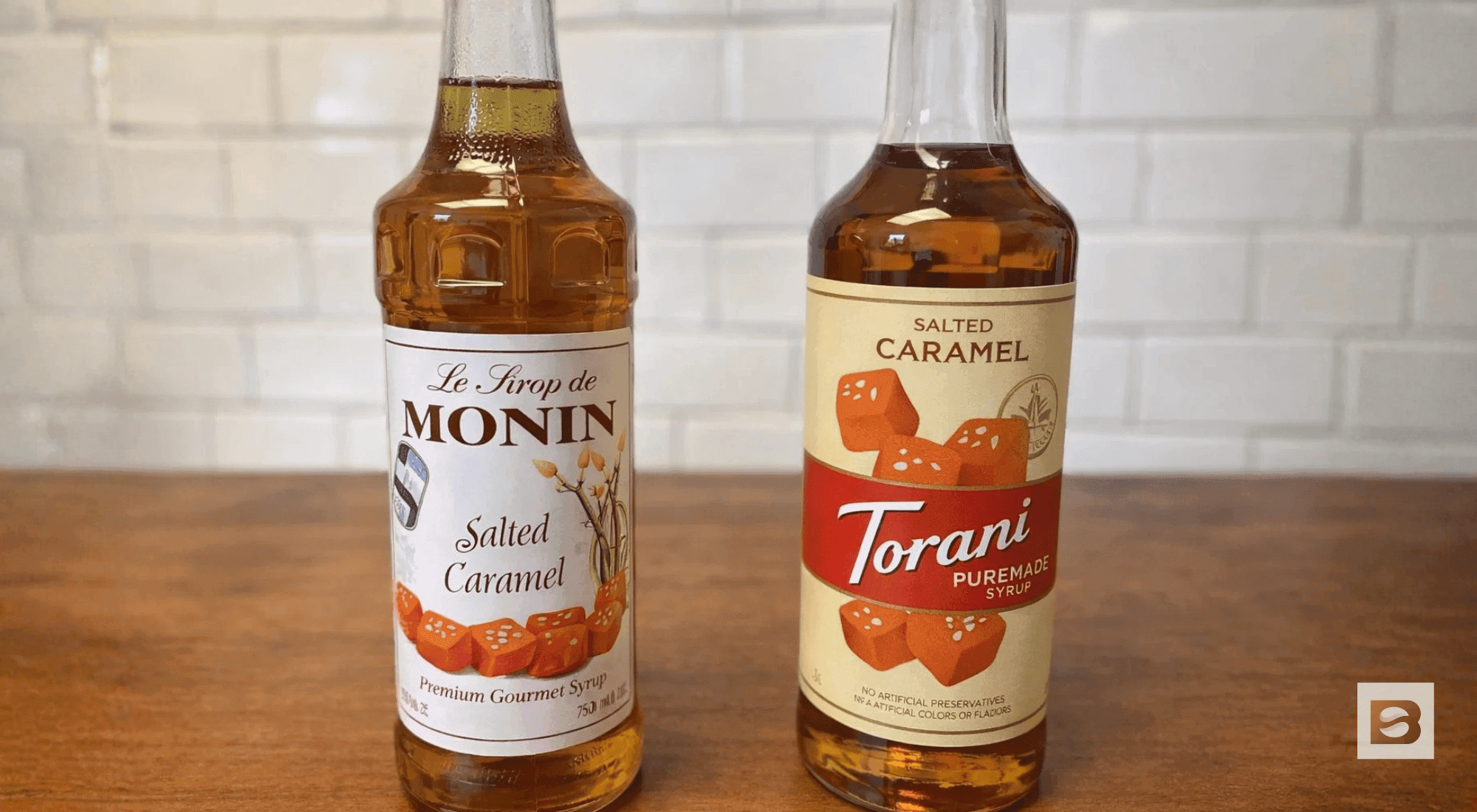
Salted caramel splits people right down the middle. Monin keeps the salt restrained. Torani goes sweeter and more indulgent. I’ve seen both bottles disappear quickly, depending on who’s drinking.
Ingredients, Sweetness, and Aftertaste in Daily Use
Monin syrups are usually made with pure cane sugar and fewer artificial ingredients. In the cup, that shows up as a cleaner aftertaste that fades quickly. You’re ready for the next sip without feeling coated.
Torani syrups are thicker and sweeter, often using corn syrup in their classic line. That thickness can be comforting in milk heavy drinks, but it also means the sweetness hangs around longer.
If you’ve ever finished a mug and felt like your mouth needed a reset, that’s usually the syrup talking.
Sugar-Free Syrups and How They Actually Taste
Sugar-free syrups matter to a lot of at-home coffee drinkers, and both brands offer them.
In my experience, Monin’s sugar-free syrups tend to taste cleaner with fewer sharp edges. They’re easier to keep subtle, especially in hot coffee.
Torani’s sugar-free syrups are widely available and popular, especially sugar-free vanilla and sugar-free caramel. They do the job, but they can leave a slightly artificial note if you overdo it.
My rule is simple. Start with less than you think you need. You can always add more syrup. You can’t take it out.
How Much Syrup Do You Really Need?
This is where most people go wrong.
With Monin, you usually need less syrup than you expect. One pump is often enough for a full mug. Two pumps can push things into dessert territory quickly.
Torani is more forgiving if you pour generously. The sweetness ramps up, but the flavor stays obvious. That’s why many baristas and home barista setups lean toward Torani for speed and consistency.
If your flavored coffee keeps swinging between bland and overpowering, the fix is often adjusting the amount, not switching brands.
When Torani Makes More Sense
There are plenty of situations where Torani is the better choice.
If you love bold, sweet coffee drinks. If you drink a lot of iced coffee or cold brews. If you want flavor that punches through milk and ice without thinking too hard. Torani fits that role well.
It’s also easier to find locally and often comes at a lower price per bottle. For busy mornings or drinks at home where consistency matters more than nuance, Torani is hard to argue with.


When Monin Really Shines
Monin shines when balance matters.
If you’re dialing in espresso, making a single latte, or trying to keep your favorite coffee tasting like itself, Monin usually behaves better. It’s also my go-to when I want just a hint of flavor without turning the drink into a sugar bomb.
If you’ve ever thought, this would be perfect with just a touch of something, that’s usually a monin moment.


Quick Comparison Table Monin vs. Torani Syrup For At-Home Coffee
This is the quick gut check I run through when the kettle is already hot, and I don’t want to overthink it.
No brand fluff, no tasting notes you’d never notice at home, just how Monin and Torani usually show up in real coffee when you’re half awake and want it to taste right.
| Category | Monin | Torani |
|---|---|---|
| Overall taste in coffee | Smoother and more balanced, coffee stays in charge | Bolder and sweeter, flavor hits first |
| Sweetness level | Moderate, you usually need less syrup | Sweeter, more forgiving if you over-pour |
| How it mixes | Dissolves cleanly in hot and cold coffee | Thicker texture, stands out more in iced drinks |
| Aftertaste | Cleaner finish that fades quickly | Longer-lasting sweetness |
| Best for | Lattes and subtle flavored coffee | Cold brew, iced coffee, bold coffee drinks |
| Sugar-free syrups | Cleaner taste with fewer artificial notes | Easy to find, slightly sweeter finish |
| Price and availability | Often a bit higher, common online | Often cheaper, easy to find in stores |
Quick takeaway for skimmers. If you want your morning coffee to still taste like coffee, Monin usually feels better. If you want bold sweetness without thinking too hard, Torani does the job.
How I Actually Use These Syrups at Home
On a normal morning coffee, I reach for Monin vanilla or caramel and keep the dose light. It adds interest without hijacking the cup, much like a well-balanced cocktail.
On slower mornings or when friends are over, Torani comes out for cold brew coffee, iced drinks, or anything where people expect obvious flavored coffee.
I keep both bottles in my home kitchen, and I don’t feel bad about it.


Monin or Torani, Which Should You Choose
If you care about balance, subtlety, and letting good beans shine, Monin is usually the better choice. If you want bold flavor, sweetness, and consistency with minimal effort, Torani earns its place as a go-to coffee syrup.
Your favorite syrups will depend on how you make coffee, what you drink most often, and how sweet you like things before your brain fully wakes up.
Most of the time, the best move isn’t picking sides. It’s knowing what each syrup does to your coffee, then using it on purpose.