All products are independently selected by our editors. If you buy something, we may earn an affiliate commission. Learn More >
Somebody hands you a bag of coffee that costs the same as a nice dinner and you’re supposed to just nod and accept it.
The usual explanation is vague talk about “quality” or a wall of tasting notes that never actually says where the money goes.
Twenty-plus years behind a counter taught me exactly where that price gap comes from, and it has nothing to do with marketing and everything to do with two completely different supply chains, one built for volume, the other built around a single farm and a level of care most people never see.
Let’s take a look.
The Price Tier Breakdown
Before we get into the why, here’s what actually changes as you move up the price ladder, from the field to your cup.
| Price Tier | Typical Cupping Score Range | Harvest Method | Freshness Window | What You'll Actually Taste |
|---|---|---|---|---|
| $5 (Commodity) | Usually below 80, often not graded at all | Mostly strip-harvested by machine | Months old by the time it reaches the shelf | Bitter, heavy, roast flavor dominates over bean flavor |
| $15 to $25 (Specialty sweet spot) | Usually in the low to mid 80s | Mostly selective hand-picking | Typically 1 to 4 weeks from roast date | Noticeable sweetness, clean finish, some origin character |
| $50+ (Rare or competition grade) | Often high 80s and up, though not always | Selective hand-picking, sometimes from a single micro-lot | Roasted in small batches close to the sale date | Distinct notes like stone fruit, florals, or citrus, high clarity |
That score column is a general pattern, not a hard rule.
A $50 bag can cost that much just because it’s rare, not because it scored higher than a well-run $20 bag. But watch how the score and the harvest method usually line up together.
You can’t hand-pick your way to a great score if the roasting falls apart, and you can’t fake a great score with cheap harvesting no matter how good the roaster is.
The $5 Bag: Commodity Coffee and the Race to the Bottom
This is the coffee sitting in the same aisle as cereal and paper towels, and it’s built around a completely different goal than the beans in your local roaster’s bin.
Commodity coffee lives and dies by the C-price, the global market rate that treats coffee like a raw material rather than an agricultural product with its own character.
When a buyer is chasing the lowest possible cost per pound, the priority shifts to volume and consistency, not flavor. That means blending beans from multiple farms, multiple countries, and sometimes multiple harvests into one uniform batch, often padded with robusta to cut costs further.
Roasting plays a role here too.
A heavy, dark roast does a great job of hiding inconsistent or lower grade beans. Char masks flaws. It also flattens whatever natural sweetness or acidity those beans might have had, which is why grocery store coffee tends to taste like one generic “coffee flavor” no matter what’s printed on the bag.
Then there’s the freshness problem nobody talks about on the label.
These beans often sit for months between roasting and your cup, moving through distribution, warehouses, and store shelves while the volatile compounds that create real flavor slowly break down.
By the time you’re grinding it, you’re mostly working with stale beans that lost their best qualities long before you opened the bag.
Pre-ground versions make this worse.
Grinding exposes far more surface area to oxygen, so a pre-ground bag that’s already been sitting on a warehouse pallet for weeks starts losing whatever flavor it had left the moment it was ground.
Add in a few more weeks on a store shelf before you buy it, and you’re often brewing coffee that’s been oxidizing for a couple months straight.

None of that shows up on the packaging, because there’s no legal requirement to print a roast date the way there’s a requirement to print an expiration date.
The $50 Bag: What Actually Justifies the Price
Here’s where people expect me to talk about branding and packaging. I’m going to talk about farming, grading, and labor instead, because that’s where the real cost lives.
Specialty coffee has to earn its label.
The Specialty Coffee Association sets the bar at 80 points out of 100 on a standardized cupping scale, scored by certified Q Graders who evaluate everything from aroma to acidity to body. A $50 bag isn’t scraping by at 80.
It’s usually sitting in the high 80s or better, the kind of score that puts a coffee in the same conversation as a rare vintage rather than a commodity crop.
That distinction matters because scores in the high 80s and 90s represent a tiny fraction of global production, and the price reflects just how hard that quality is to hit consistently.
Traceability is the next piece.
Cheap coffee gets blended anonymously across regions. Premium coffee gets traced back to a specific estate, a specific micro-lot, sometimes a specific plot of trees at a documented altitude.
You can often find out who grew it and how they processed it, which is a level of accountability commodity coffee was never built to offer.
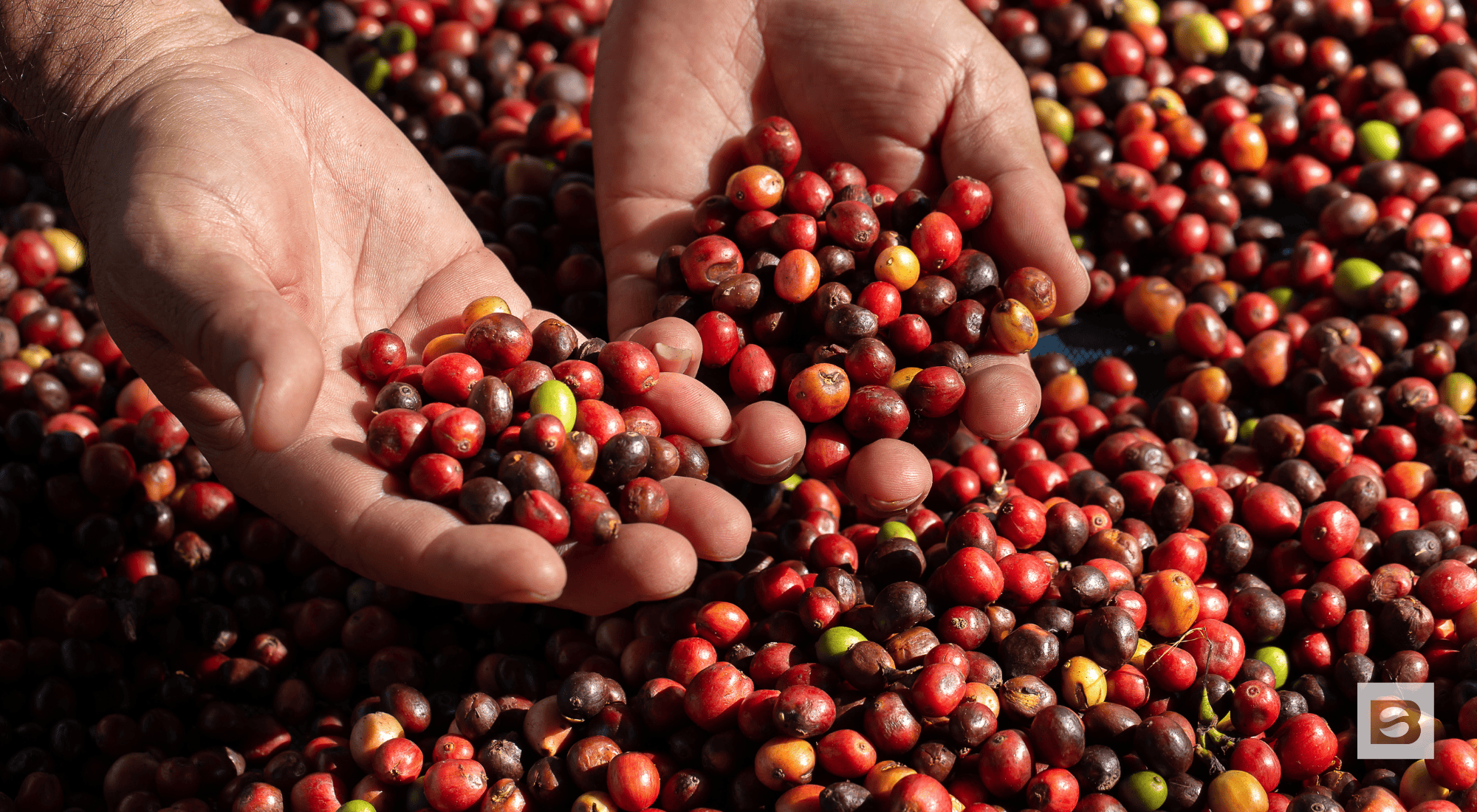
Labor is where the price gap gets physical. Commodity farms often strip-harvest, stripping every cherry off the branch regardless of ripeness, because speed matters more than selection.
Specialty farms pay workers to walk the same trees multiple times over a harvest season, hand-picking only the cherries that are perfectly ripe that day. That’s slower, it’s more expensive, and it’s the reason the cup tastes cleaner and sweeter.
Processing adds another layer of cost and complexity.
Beyond the classic washed method, you’ll find anaerobic fermentation, controlled yeast inoculations, and precise honey processing, all of which require constant monitoring to avoid spoiling an entire lot.
Get it right and you unlock flavors that pushed the coffee’s score up in the first place. Get it wrong and the farmer loses the harvest.
Rarity plays a role too. Cultivars like Gesha command a premium because they yield less fruit per tree and demand more attention to grow well, which means less coffee reaches the market every year.
Supply and demand does the rest.
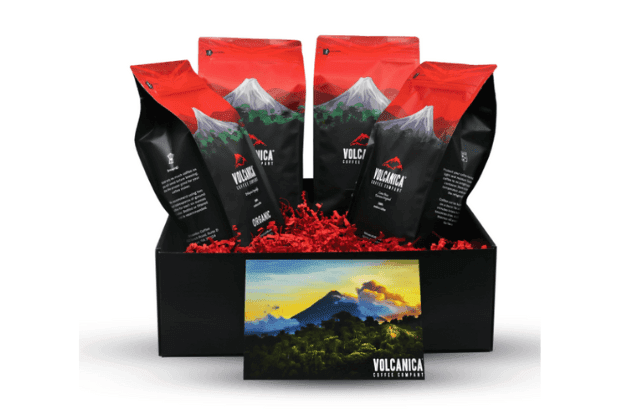
Volcanica Coffee Lover Gift Box
The perfect gift box for the average avid coffee drinker, this gift box includes the best-selling products all in one package. Explore the taste of favorite coffees from around the world from the comfort of home.
The Roaster’s Role and the Freshness Window
Growing exceptional coffee only gets you halfway there.
What happens after the beans arrive at the roastery decides whether all that farming work actually reaches your cup.
Small-batch roasters treat every lot differently, tuning roast profiles to highlight what’s already there rather than burning past it.
That’s a completely different mindset from industrial roasting, where the goal is consistency across massive volume rather than expression of a single origin’s character.
This is where those tasting notes on the bag stop being marketing fluff. A well-roasted $50 coffee can genuinely taste like jasmine, bergamot, or stone fruit, because the volatile compounds responsible for those flavors survive the roast instead of getting roasted into oblivion.
You’re not imagining it when a cup tastes fruity or floral.
Those compounds are real, they’re fragile, and they only show up when the beans are handled with care from farm to roast.
Freshness closes the loop. Specialty coffee is meant to be consumed within one to four weeks of its roast date, while those compounds are still intact. That’s the opposite of a grocery store bag that’s already been sitting for months by the time you buy it.
Check the roast date before you check the price tag. It tells you more about what you’re actually getting.
Acidity, body, and clarity all ride on that freshness window too.
A coffee that’s still within its peak weeks will show bright, well-defined acidity and a body you can actually describe, whether that’s silky, syrupy, or crisp.
Let that same coffee sit too long and those distinctions blur together into flatness, no matter how good the beans were to begin with. That’s the part a lot of casual drinkers miss.
You can buy an incredible micro-lot and still ruin the experience by letting it sit in the pantry for two months before brewing it.
Match Your Gear to the Bag
Here’s something nobody tells you at the register. A $50 bag of coffee can taste worse than a $5 bag if you’re brewing it on the wrong equipment, and that’s not a knock on the coffee.
Dark roasts are forgiving by design. The heat has already broken down a lot of the bean’s structure, so even a cheap drip machine with inconsistent water temperature will pull a decent, familiar cup.
That’s part of why commodity coffee works for so many people. It doesn’t demand much from your gear.
Light roast specialty coffee flips that completely.
Those beans are denser and hold onto more of their structure going into the brew, which means they need more precise water temperature, a consistent grind, and the right contact time to actually extract the flavors you paid for.
Run a $50 micro-lot through a basic drip machine with a blade grinder and you’re more likely to pull something sour and thin than something floral and complex. The beans aren’t the problem. The extraction is.
If you’re using a standard drip machine, stick to medium and dark roasts in the $10 to $15 range and you’ll get a consistent, satisfying cup.
Once you’ve got a decent burr grinder and a pour-over or a proper drip brewer, the $15 to $25 range starts to shine, since your gear can actually pull out the origin character you’re paying for.
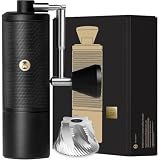
Save the $50 micro-lots for when you’ve got the equipment, whether that’s a quality espresso setup or a dialed-in pour-over routine, to do them justice.
Otherwise you’re paying premium prices for a cup that never reaches its potential.


Final Thoughts
A $50 bag of coffee isn’t meant to replace your everyday cup. Think of it the way you’d think of a good bottle of wine, something you slow down for rather than chug on the way out the door, and remember that the price stretches further than it looks once you break it down to cost per cup instead of cost per bag.
If that price feels like a stretch, you don’t have to jump straight to the top. Freshly roasted specialty coffee in the $15 to $25 range shows you most of what separates commodity coffee from the real thing, without the sticker shock.
Get the gear to match it, and you’ll understand exactly why the $50 bags exist.