All products are independently selected by our editors. If you buy something, we may earn an affiliate commission. Learn More >
If you’ve ever followed a grind setting from a recipe online and pulled a completely different shot, you’re not doing it wrong.
You’re experiencing one of the most misunderstood quirks in home espresso. Two people can own the same grinder, use the same beans, follow the same recipe, and still be grinding at completely different particle sizes.
The reason comes down to something called true zero, and once you understand it, a lot of frustration disappears.
Let’s take a look, you don’t want to miss this!
Why Your Grinder Settings Don’t Match Anyone Else’s
Here’s something Eureka, Baratza, and every other manufacturer will tell you if you ask: the number printed on your grinder dial is a reference point, not a universal measurement.
Every grinder that rolls off the production line has tiny manufacturing tolerances in how the burrs are seated.
Two Eureka Mignon Zero grinders sitting side by side can have their burrs touching at completely different points on the dial. One might chirp at 0.5, the other at 1.2.
So when a barista on a forum says “I dial my espresso at 1.4 on the Mignon,” that number is meaningless to you unless you both know where your actual zero points are.
This is why grinder settings feel like a foreign language until you establish your own reference.
What Is True Zero on A Coffee Grinder?
True zero is the point at which the two burrs inside your grinder first make physical contact with each other.
Nothing is being ground at this point. It’s the absolute finest setting the grinder can reach before the burrs start touching, which makes it your universal starting line.
The “0” marked on your grinder’s dial is a factory approximation.
On a stepless grinder like the Eureka Mignon Zero, with its micrometric stepless adjustment, that printed zero might be half a turn away from where the burrs actually meet.
On a stepped grinder like the Baratza Encore, the true zero point adjustment works slightly differently, but the principle is the same: you need your own baseline, not the factory’s guess.
Once you know your true zero, a grind setting becomes “7 clicks from zero for pour-over” instead of “somewhere around 3.”
That’s a number you can repeat, share, and trust.
Why Finding True Zero Matters for Espresso and Filter Coffee
This isn’t just a hobbyist obsession. It has real, practical consequences for every cup you make.
For espresso, the margin for error is tiny. A fraction of a millimeter difference in burr gap can shift your shot from 25 seconds to 40 seconds. If you’ve cleaned your grinder and reassembled it, your previous setting is gone.
Without knowing your true zero, you’re back to square one, wasting coffee and time.
For filter coffee, it’s less critical but still useful. If you’re brewing on a V60 and someone recommends “15 clicks from zero on a Commandante,” knowing your zero makes that number actually translate.
The Commandante is a stepped hand grinder where each click represents a consistent increment, so clicks from zero become your shared language.
Knowing your true zero also protects your burrs.
When you understand where the absolute finest point is, you won’t accidentally grind past it and risk metal-on-metal damage during a frantic dial-in session.
How To Do The Burr Chirp Test Safely
The chirp test is how you find your grinder’s true zero point, and it’s easier than it sounds.
Before anything else, clean your grinder. Old coffee grounds between the burrs act as a cushion and give you a false reading. Use a brush and a vacuum to clear the burr chamber and the grind chute.
A dirty grinder will chirp earlier than it should, and you’ll end up calibrating to a false zero.
Once it’s clean:
- Make sure there are no coffee beans in the hopper or grind chamber
- Turn the grinder on so the motor is running (critical for stepless grinders like the Mignon models; never adjust burrs to contact on a stationary motor)
- Slowly turn the adjustment toward the finer setting in very small increments
- Listen carefully for a faint metallic chirping sound
- The instant you hear it, stop adjusting immediately
That chirp is the sound of the burr edges just beginning to touch as they spin. Note the number or position on the dial. That’s your true zero point.
Does finding true zero damage burrs? A brief touch while the motor is running will not damage hardened steel burrs.
The risk comes from holding that contact position and letting the burrs grind against each other for an extended period.
Hear it, note it, and back off. Two seconds of contact is fine. Two minutes is not.

Grinder Calibration After Cleaning
This catches a lot of people off guard.
You clean your grinder, reassemble everything, go back to your saved grind setting, and suddenly your espresso is pouring like water. What happened?
When you remove and replace the top burr, even by a fraction of a turn, you shift the physical relationship between the two burrs.
Your old zero is gone. Grinder calibration after cleaning isn’t optional. It’s a necessary reset.
The good news is that the chirp test takes less than two minutes. Build it into your cleaning routine, and you’ll never lose your reference point again.
True Zero on Popular Coffee Grinders
Every grinder has its own personality when it comes to finding true zero. Here’s how the process plays out on some of the most common machines.
Eureka Mignon Zero
The stepless micrometric adjustment on the Mignon Zero makes this one of the more satisfying grinders to calibrate.
Run the motor, creep the dial slowly toward the finer setting, and listen. The 55mm flat hardened stainless steel burrs give a clear, distinct chirp when they meet.
Once you’ve found it, the stepless adjustment means you can move away from zero in extremely fine increments, which is exactly what you want when dialing in espresso.
The Eureka Mignon Zero espresso grinder rewards the effort more than most, because the precision of its stepless system makes your reference point genuinely useful at every step of the dial.
Fellow Ode
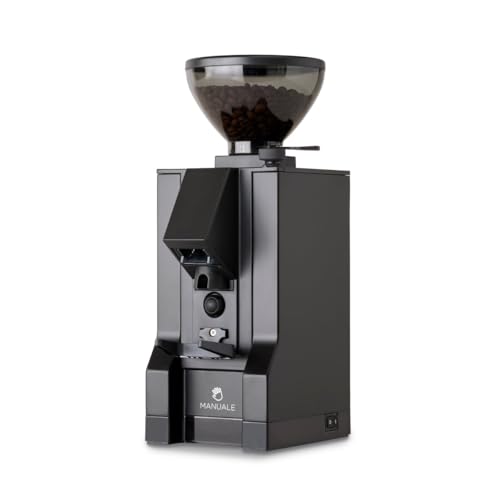
The Ode uses a stepped adjustment system, which means your zero point is tied to a specific click rather than a position between numbers.
The chirp test still applies.
Run the motor and creep toward finer one click at a time until you hear contact, then back off one click. That click becomes your reference for all future settings.
DF64
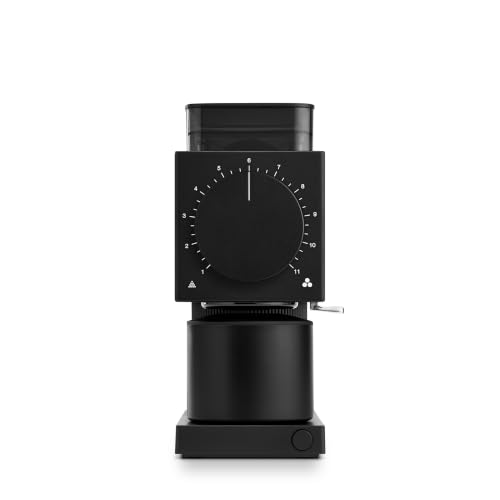
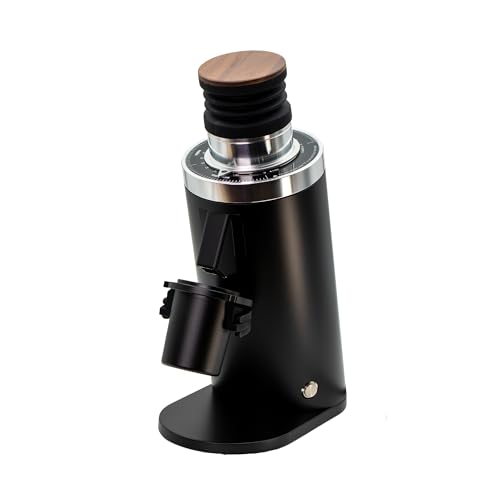
The DF64 coffee grinder has a reputation for burr alignment that varies between units, which means the chirp test is even more important here than on most grinders.
Some users find the true zero point shifts slightly depending on how firmly the upper burr is seated after reassembly.
If your result feels inconsistent, reseat the burr and retest before assuming your calibration is correct.
Baratza Encore
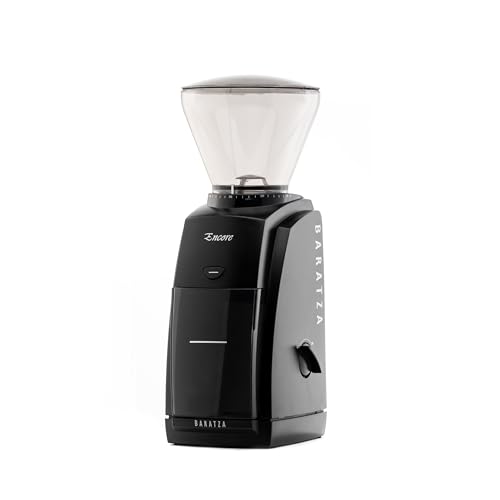
The Encore’s zero point adjustment involves a small collar that can be rotated to shift where the numbers on the dial sit relative to the actual burr position.
Most users won’t need to touch this unless the grinder has been disassembled.
After a deep clean and reassembly, run through the chirp test and note where your true zero falls before returning to your usual grind setting.
1Zpresso and Commandante
Hand grinders handle calibration differently.
The 1Zpresso reset process is mechanical: you close the adjustment dial fully to set the starting point, then open from there.
Their official calibration guide walks you through resetting the zero point after any reassembly.
On the Commandante, most users count from the point of light resistance as their zero reference, with a typical pour-over landing somewhere between 25 and 35 clicks out, depending on the bean and roast.


How Many Clicks from Zero for Espresso and Pour-Over?
These are starting points, not fixed rules. Every bean, roast date, and humidity level will shift things.
For espresso on a stepless grinder like the Eureka Mignon, you’ll typically be within one to two full dial units from your true zero. For filter coffee, you’ll be several units or many clicks further out.
On the Commandante, pour-over usually starts around 28 to 32 clicks from zero. On the DF64 with stock burrs, espresso generally falls between two and four on the dial measured from your true zero point.
The value isn’t in these numbers themselves. It’s in having your own baseline so that when a recipe says “8 clicks from zero,” you’re speaking the same language as the person who wrote it.
| Grinder | Espresso | Pour-over | French Press |
|---|---|---|---|
| Eureka Mignon Zero | 1-2 dial units | 4-6 dial units | 8+ dial units |
| Fellow Ode | N/A | 3-5 clicks | 7-9 clicks |
| DF64 | 2-4 dial units | 6-8 dial units | 10+ dial units |
| Baratza Encore | 5-8 clicks | 15-20 clicks | 28-35 clicks |
| Commandante | 15-20 clicks | 28-32 clicks | 38-45 clicks |
| 1Zpresso JX/JX-Pro | 20-30 clicks | 40-50 clicks | 60-70 clicks |
All figures are measured from your personal true zero point, not the factory zero marked on the dial.
Final Thoughts
Finding your coffee grinder’s true zero point is one of those things that sounds more complicated than it is. Fifteen minutes of cleaning and a careful listen, and you have a reference point that makes every other adjustment meaningful.
Whether you’re pulling espresso on a Eureka Mignon Zero, dialing in a pour-over on a Commandante, or recalibrating after a deep clean, knowing where your burrs actually meet puts you in control of your grind.
Do it once, and you’ll wonder how you ever dialed in without it.