All products are independently selected by our editors. If you buy something, we may earn an affiliate commission. Learn More >
The first time someone tells you to put salt in your coffee, your face probably does something involuntary. Mine did too. Salt felt like it had no business anywhere near a cup of coffee.
Then I actually tried sea salt coffee, and I got it immediately.
It doesn’t taste like a mouthful of ocean water. Done right, it tastes smoother, rounder, almost like the coffee grew a caramel note it didn’t have before, and there’s real food science behind that shift.
Why Add Salt to Coffee (The Science Behind It)
Salt in coffee isn’t a gimmick. It’s the same trick chefs use when they add a pinch of salt to chocolate desserts or caramel sauce.
Sodium ions interact with the taste receptors on your tongue and dial down your perception of bitterness. Coffee, especially darker roasts and robusta-heavy blends, carries a fair amount of bitter compounds from chlorogenic acids.
When salt enters the picture, those bitter signals get quieter, and the sweetness and roasted, chocolatey notes that were already in the coffee become easier to taste.
Food scientists call this cross-modal taste perception. Your brain isn’t tasting less coffee. It’s tasting a clearer version of it.
This is one of the real salt in coffee benefits people notice right away.
You get a smoother cup without adding more sugar, and dark roasts that usually taste harsh or ashy come across as rounder and more balanced.
How Much Salt Is Too Much
Here’s where most guides fall short. They tell you to add “a pinch” and leave you guessing, and guessing with salt is how you end up with a cup that tastes like broth.
The goal is a dose so small you can’t identify salt as a distinct flavor. If you can taste salt on its own, you’ve gone too far and you’re now making a savory drink instead of a smoother one.
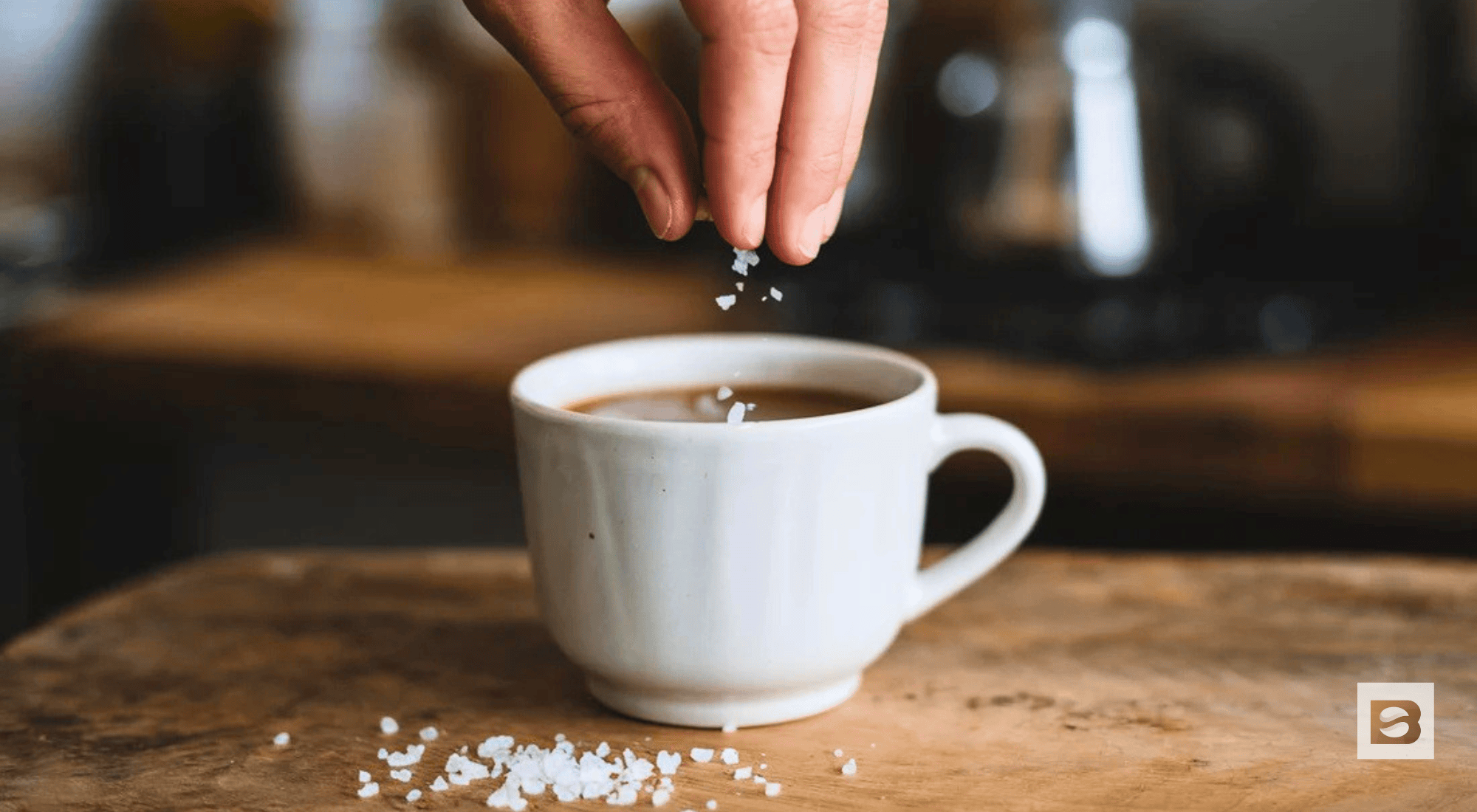
A good starting point is about 1/8 teaspoon of fine salt per 8 to 12 ounces of brewed coffee, stirred in before you add any milk or cream.
Taste it. If it tastes cleaner and sweeter without tasting salty, you’ve nailed it.
Salt type matters more than people expect. Table salt often contains iodine and anti-caking agents that can leave a slightly metallic or chemical aftertaste in something as delicate as coffee.
Fine sea salt or kosher salt dissolves cleanly and tastes purer. Save flaky sea salt for garnishing the top of your drink, since coarse flakes don’t dissolve well in liquid and will just sit there tasting salty instead of blending in.


Two Very Different Sea Salt Coffees
Search around and you’ll find plenty of confusion between two coffee traditions that share a name but almost nothing else.
Knowing the difference will make you sound like you actually know what you’re talking about at your next coffee shop order.
Taiwanese Sea Salt Coffee
The Taiwanese bakery chain 85°C Bakery Cafe, founded in Taiwan in 2004, is widely credited with turning sea salt coffee into a global phenomenon. Their version starts with a sweetened iced Americano, topped with a thick layer of whipped salted cream foam.
The inspiration reportedly came from a Taiwanese culinary habit of sprinkling salt on fruit like watermelon to intensify its sweetness.
The drink caught international attention after being covered by outlets including Time and NPR, and 85°C bakery coffee has since become the drink’s most recognizable ambassador worldwide.
Vietnamese Salt Coffee (Cà Phê Muối)
Vietnamese salt coffee, known locally as cà phê muối, has separate roots entirely. It was created in Huế by café owners Ho Thi Thanh Huong and Tran Nguyen Huu Phong at their shop on Nguyen Luong Bang Street, with most sources placing the drink’s debut in the early 2010s.
Their version starts with strong Vietnamese coffee, traditionally brewed through a metal phin filter using robusta coffee beans, layered over sweetened condensed milk, then finished with a salted cream topping.
Robusta beans carry noticeably more bitterness and caffeine than arabica, which is exactly why the Huế recipe leans on salt so heavily. It’s not decoration here.
It’s doing real work to tame the bean’s natural intensity.
The two drinks share a name and a technique, but the Taiwanese version is closer to a salted cream latte and the Vietnamese version is a dense, condensed milk forward coffee with deep roots in Huế’s café culture.

How to Make Sea Salt Coffee at Home
You don’t need a plane ticket to either country to enjoy this. Here’s a foolproof, café-style version you can build in your own kitchen.
Step 1: Brew your base (5 minutes). Brew a strong cup of coffee and let it cool. A dark roast or espresso shot works well for the Taiwanese style. For something closer to Vietnamese salt coffee, brew robusta coffee beans through a phin filter for that heavier, bolder profile.
Step 2: Make the salted milk foam recipe (3 minutes). Combine 3 tablespoons of heavy whipping cream, 1/8 teaspoon of fine sea salt, and 1 teaspoon of sugar or simple syrup in a small bowl. Whip with a milk frother until it forms a thick foam that holds its shape but still pours slowly off a spoon.
Step 3: Assemble the drink (1 minute). Fill a glass with ice and pour your cooled coffee over it. If you’re going for the Vietnamese style, spoon a layer of sweetened condensed milk into the glass before adding the coffee.
Step 4: Layer the foam (30 seconds). Gently spoon the salted cream foam over the top so it sits on the coffee instead of mixing in. A tiny pinch of flaky sea salt on top adds a nice finishing touch and a bit of visual drama as it slowly sinks.
You can also apply this same salted cream approach to sea salt cold brew if you want a lower-acid, smoother base without the extra brewing step.

Common Mistakes That Ruin Sea Salt Coffee
I’ve made every one of these so you don’t have to.
Using iodized table salt instead of fine sea salt is the most common misstep, and it’s the fastest way to turn a subtle flavor enhancer into something that tastes like a science experiment.
Adding too much salt is the second, and it happens because people eyeball it instead of measuring.
A third mistake is skipping the whip step and just stirring cold cream on top, which gives you a thin, watery layer instead of a foam that holds its shape and creates that signature look.
The last mistake is rushing the drink itself, which brings us to how you’re actually supposed to enjoy it.
How to Drink It (Sequential Tasting)
Resist the urge to stir the second it lands in front of you. Part of what makes sweet and savory coffee like this so interesting is the order you taste it in.
Sip through the cold, lightly salted cream first, then let the bold coffee underneath hit your tongue right after.
That contrast, cool and salty followed by bold and sweet, is the whole point of the drink. Stir it together too early and you flatten that experience into one uniform flavor.
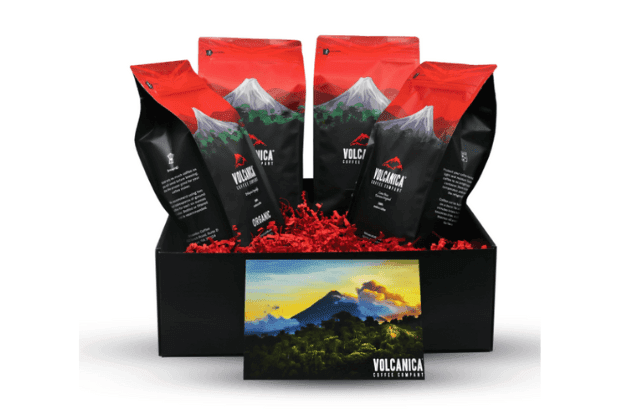
Volcanica Coffee Lover Gift Box
The perfect gift box for the average avid coffee drinker, this gift box includes the best-selling products all in one package. Explore the taste of favorite coffees from around the world from the comfort of home.
Final Thoughts
Sea salt coffee isn’t a stunt drink built for a photo. It’s a genuinely smart piece of flavor science wearing a fun disguise, borrowed from two coffee cultures that figured out something most of us never think to try.
Whether you lean Taiwanese with a salted cream Americano or Vietnamese with a robusta phin brew and condensed milk, the underlying trick is the same: a little bit of salt clears the path for the coffee’s sweetness to actually show up.
Measure carefully, use the right salt, and don’t stir too soon. That’s really all it takes.