All products are independently selected by our editors. If you buy something, we may earn an affiliate commission. Learn More >
If you’ve spotted “dirty coffee” on a café menu and had no idea what to order, you’re not alone. It sounds like a mistake. It isn’t.
Dirty coffee is one of the most interesting espresso drinks to emerge from specialty coffee culture in the last two decades.
It has a proper origin story, a distinct technique, and a flavour that actually evolves as you drink it. That last part is what separates it from almost every other coffee drink you’ve tried.
Once you understand what it is and why it works the way it does, you’ll want one immediately.
The Dirty Coffee Meaning
Dirty coffee is a deceptively simple drink.
You pour hot espresso directly over cold milk in a chilled glass, and you leave it alone. There’s no ice. No stirring. No foam. Just hot espresso and cold milk, two ingredients, sitting in deliberate contrast.
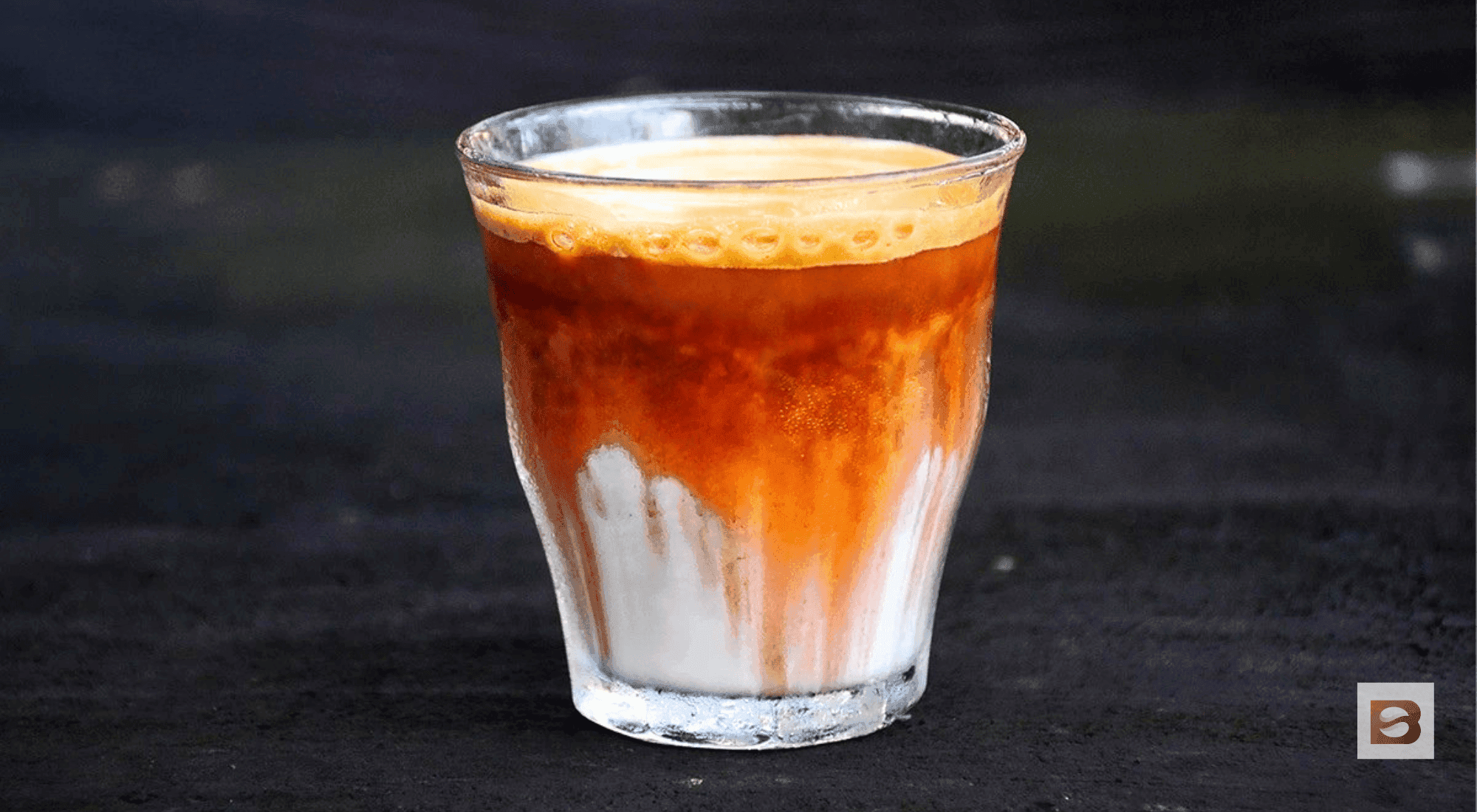
The result is a layered drink that looks almost too good to touch, with dark espresso resting on top of sweet milk before slowly sinking and swirling into it.
That visual appeal is part of the point. So is the fact that every sip tastes different from the last.
The Origins of Dirty Coffee
Most coffee shops that serve dirty coffee today didn’t invent it. The credit goes to Katsuyuki Tanaka, the founder of Bear Pond Espresso in the Shimokitazawa neighbourhood of Tokyo, around 2010.
The story goes that a regular customer, a local hair salon owner, kept complaining that her iced latte was watery and diluted by the time she finished it. Melting ice was ruining her drink.
Tanaka’s solution was to ditch the ice entirely and use cold milk straight from the fridge as the base.
He then poured a strong espresso shot directly over it. The espresso floated, the milk stayed cold, and the drink held its character from first sip to last.
That small fix gave birth to the origins of dirty coffee as we know it today.

From Tokyo, the drink spread across Asia, particularly South Korea and Thailand, before landing on coffee menus in Europe, Australia, and beyond.
It’s now a genuine global coffee trend, though many people still encounter it for the first time and wonder what on earth “dirty” means.
So, Why Is It Called Dirty?
The name is purely visual.
When you pour the espresso over cold milk, it doesn’t mix cleanly. Instead, it bleeds into the milk in dark, irregular streaks and swirls, staining the white milk like ink dropped into water.
It looks dirty. That’s it. The name stuck, and honestly, it’s perfect.
What Does Dirty Coffee Actually Taste Like?
This is where dirty coffee gets genuinely interesting. This isn’t a static drink. The coffee flavour changes as you drink it.
Your first sip hits you with strong espresso. Rich, bold, with dark chocolate undertones and very little sweetness. You’re drinking mostly espresso at this point, with the cold milk just chilling it slightly at the edges.
Katsuyuki Tanaka described the experience as roughly 80% espresso, 20% milk on that first contact.
As you work through the glass, the espresso and cold milk begin to blend. The flavour softens. The bitterness drops. By the time you reach the bottom, you’re drinking something closer to a cold latte, cool, smooth, and mellow.
The cold milk also does something that surprises people.
Cold temperatures suppress bitterness. So even though you’re drinking a strong espresso, it tastes cleaner and less harsh than a hot espresso shot would.
If you’ve ever found espresso drinks too aggressive, a classic dirty coffee is worth trying.
One thing every barista will tell you: don’t stir it. The whole point is the layered effect. Mix it, and you’ve just made a cold latte.
Dirty Coffee vs Iced Latte: What’s the Difference?
They look similar at first glance, but they’re built differently and taste nothing alike.
An iced latte is espresso poured over ice, with milk added and everything mixed together. The flavour is consistent from start to finish. The temperature is controlled by ice, which also dilutes the drink over time.
Dirty coffee uses no ice. The chill comes entirely from the cold milk. The espresso is poured on top and left to layer, not blend. There’s no dilution, no melting, and the flavour shifts as you drink.
An iced latte is a finished product, but dirty coffee offers a different experience with its unique layering of espresso and milk. Dirty coffee is a journey.
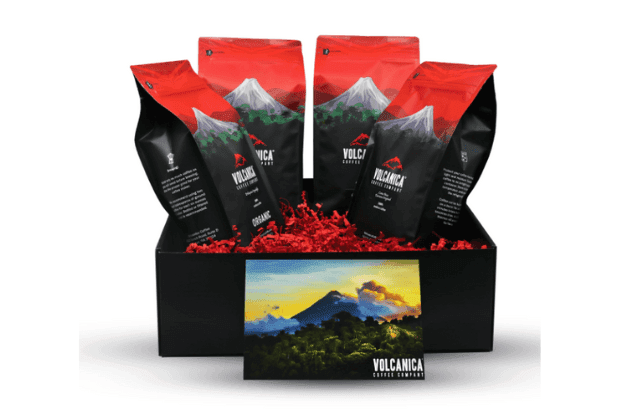
Volcanica Coffee Lover Gift Box
The perfect gift box for the average avid coffee drinker, this gift box includes the best-selling products all in one package. Explore the taste of favorite coffees from around the world from the comfort of home.
How to Make Dirty Coffee at Home
Making dirty coffee at home is straightforward. You need an espresso machine, a small chilled glass, and whole milk straight from the fridge.
Start by chilling your glass in the freezer for a few minutes. Pour in cold milk, roughly 80 to 100ml, until the glass is about two-thirds full. Pull a double shot of espresso, extracted strong and fresh.
Now the key step: pour the espresso slowly over the back of a spoon held just above the chilled milk. This slows the pour and helps the espresso land gently on top rather than plunging through it.
You’ll see the distinct layer form immediately.
Leave it. Don’t touch it. Drink it straight away while the contrast between hot espresso and cold milk is at its sharpest.
A few tips for a perfect dirty coffee at home. Use whole milk. The fat content gives the milk enough density to support the espresso above it.
Use a strong, well-extracted espresso, because a weak shot will just vanish into the milk. And use a clear glass so you can actually see the layered effect you’ve created.
What About Dirty Chai?
Dirty chai follows the same logic as dirty coffee, but takes things in a completely different flavour direction.
You start with a spiced masala chai, add steamed milk, then finish with a shot of espresso poured over the top.
The espresso cuts through the sweetness of the chai and adds a bitter, roasted edge that balances the warm spice.
It’s a surprisingly good combination, and if you enjoy both coffee and chai, it’s worth ordering the next time you see it on a menu.
Why Dirty Coffee Is Becoming a Global Coffee Trend
Dirty coffee is becoming more common on menus outside Asia for a few reasons. Specialty coffee culture has trained drinkers to pay attention to flavour nuance, and dirty coffee rewards that attention.
The visual appeal doesn’t hurt either. A well-made dirty coffee in a clear glass looks stunning and photographs beautifully.
Coffee shops have also noticed that it’s a drink with a story. Baristas enjoy explaining it. Customers enjoy hearing it.
In an industry full of similar espresso drinks, that combination of visual drama, evolving flavour, and a genuine origin story makes dirty coffee stand out.
Cold coffee drinks as a category continue to grow, and dirty coffee sits in an interesting space within that. It’s cold, but it uses hot espresso. It’s simple, but the experience is layered.
For a coffee lover looking for something beyond the usual cold brew or iced latte options, it delivers something genuinely different.


Final Thoughts
Dirty coffee is proof that the best ideas in the coffee industry are often born from the simplest frustrations. A customer didn’t want watery coffee.
A barista found a better way.
What came out of that conversation is a drink that genuinely rewards you for paying attention to it.
If you haven’t tried it yet, find a local coffee shop that makes one well, or pull out your espresso machine and give it a go yourself at home. The recipe is simple. The experience is anything but.