All products are independently selected by our editors. If you buy something, we may earn an affiliate commission. Learn More >
I’ve lost count of how many times someone’s told me their French press coffee tastes bitter, weak, or just a bit off, and when I ask about water temperature, I get a shrug.
Most people obsess over beans and grind size.
Fair enough.
But if your French press water temp is way off, you’re fighting a losing battle before the brew even starts.
Let’s break down what the best temperature for French press coffee actually is, why it matters, and how to control it without turning your kitchen into a science lab.
Why Water Temperature Actually Matters
Brewing coffee is extraction. You’re dissolving acids, sugars, oils, and bitter compounds from ground coffee into water.
Temperature controls the speed and intensity of that extraction. Hotter water extracts more, faster. Cooler water extracts less, slower.
With a French press, you’re using full immersion. The coffee grounds sit in the water for several minutes. That long contact time means you don’t need extreme heat to extract properly.
In fact, too much heat can easily push the brew into bitterness.
If your water is too cool, you’ll under extract. The cup tastes thin, sour, maybe a bit hollow.
If your water is too hot, you’ll over extract. That’s when you get dryness at the back of your tongue and a lingering harsh finish.
The best temperature for French press coffee gives you sweetness first, then body, then a clean finish. When it’s right, you’ll know.
The Best Temperature for French Press Coffee
Here’s the range that works consistently:
- 90°C to 96°C
- 195°F to 205°F
If you want a starting point that works for most medium roasts, aim for 93 to 94°C. That’s about 200°F.
I’ve brewed the same beans at 96°C and again at 92°C back to back. At 96°C, the cup felt heavier and slightly aggressive. At 92°C, it softened up, sweetness came forward, and the bitterness stepped back.
Same grind, the same brew time, just a change in temperature.
A few degrees matters.
Here’s how that range tends to behave:
- 90 to 92°C gives you a softer, lighter cup. Good for darker roasts or if bitterness is creeping in.
- 93 to 94°C is the sweet spot for balance. This is where most beans taste composed and full.
- 95 to 96°C creates more body and strength, but the margin for error gets thinner.
There isn’t one magic number. But there is a zone where your coffee starts tasting like it was meant to.
Why “Just Off the Boil” Can Mislead You
Most advice says boil the kettle and wait 30 seconds.
That’s not terrible advice. But it assumes all kettles cool the same way. Spoiler – They don’t.
A thin stovetop kettle drops temperature quickly. A thick electric kettle with a closed lid holds heat longer. The amount of water you boiled changes cooling speed.
Even your kitchen temperature plays a role.
Then there’s your French press itself. Glass absorbs heat fast.
If you pour 94°C water into a cold press, you immediately lose a few degrees. Your brewing slurry might already be closer to 90°C within seconds.
Most people never think about that.
If your press lives in a cold cupboard overnight, that first pour loses more heat than you realise. It sounds minor, but it shifts extraction enough to change the taste.
Heat Loss During Brewing: What’s Really Happening
There’s something most people don’t realise about French press brewing.
Your water temperature doesn’t stay constant during the four-minute brew.
Heat escapes into:
- The glass walls
- The metal frame
- The surrounding air
- The coffee grounds themselves
Even if you start at 94°C, by minute two, you could already be several degrees lower. By minute four, lower again.
That’s normal. But it means your starting temperature needs to account for natural heat loss.
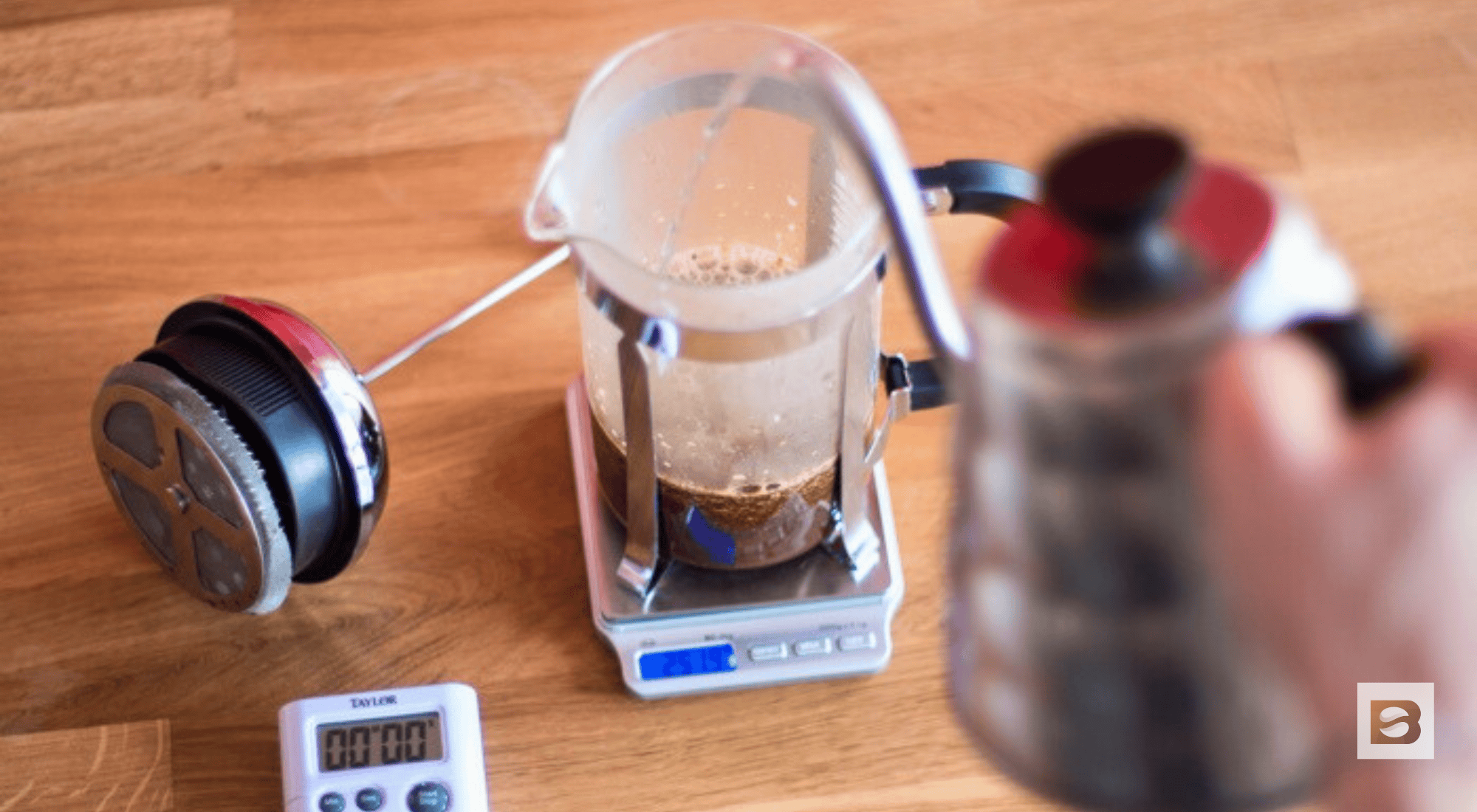
Two simple habits help massively: Pre-heat your best French press with hot water before brewing. Swirl it around, discard it, then add your grounds.
Keep the lid on during steeping. That traps heat and stabilises the brew.
It sounds small. It isn’t. Trust me, give it a try, and you’ll notice pretty quickly how your consistency improves immediately.


How Temperature Works With Grind and Brew Time
Temperature is just one of three levers. The other two are grind size and brew time. They all interact.
If your grind is very coarse and you brew for four minutes, slightly hotter water can help you extract enough sweetness.
If your grind is slightly finer or you steep for longer than four minutes, cooler water can prevent over extraction.
Think of it like this:
- Hotter water plus long brew time equals more extraction.
- Cooler water plus short brew time equals less extraction.
If your coffee tastes sour, your extraction is likely low. Try slightly hotter water or a slightly finer grind.
If it tastes bitter or drying, your extraction is probably too high. Try slightly cooler water or a coarser grind.
Change one variable at a time. Taste. Adjust. Repeat.
Roast Level Changes the Game
Roast level affects how the coffee responds to temperature.
Light roasts are dense and harder to extract. They often benefit from being closer to 95 or even 96°C.
Medium roasts usually shine around 93 to 94°C. Dark roasts extract easily and can turn bitter fast.
I often brew darker beans at 90 to 92°C to keep the cup smooth and rounded. If your dark roast tastes smoky and harsh, lower the temperature before blaming the beans.
Nine times out of ten, it’s the water.
Practical Ways to Hit the Right French Press Water Temp
If you have a temperature control kettle, use it. Set it to 93 or 94°C, and you’re in a great place.
If you don’t, here’s a reliable approach:
- Bring water to a rolling boil.
- Turn off the heat.
- Wait 30 to 60 seconds.
- Pour into a pre-warmed press.
That method usually lands you in the right range. Is it laboratory precise? No. Is it consistent enough to brew excellent coffee? Absolutely.
If you want even more control without buying new gear, a simple digital kitchen thermometer costs very little and removes the guesswork completely.

Quick Taste Adjustment Guide
Here’s a simple reference you can use while dialing in.
| Taste Issue | Temperature Adjustment | Why It Helps |
|---|---|---|
| Sour or thin | Increase temp slightly | Boosts extraction of sugars and balance |
| Flat or dull | Increase temp 1 to 2°C | Encourages fuller extraction |
| Bitter or harsh | Decrease temp slightly | Reduces over extraction of bitter compounds |
| Dry, astringent finish | Lower temp and check grind | Limits aggressive extraction |
Keep adjustments small. One or two degrees can shift the cup noticeably.
So, What’s the Best Water Temp for French Press?
If you want the simple answer you can use tomorrow morning, here it is.
Start at 93 to 94°C.
Use a coarse grind. Brew for four minutes. Pre-heat your press. Keep the lid on while it steeps.
Then taste it carefully.
If it’s not quite right, don’t panic and change everything. Adjust the temperature slightly and see what happens.
The best temperature for French press coffee isn’t about memorising a number. It’s about understanding how heat shapes extraction and using that knowledge to steer your cup where you want it to go.
Once you start paying attention to your French press water temp, you’ll notice how much control you actually have.
And that’s when French press stops being “just easy coffee” and starts becoming something you’ve genuinely dialed in.