All products are independently selected by our editors. If you buy something, we may earn an affiliate commission. Learn More >
Most people spend serious money on an espresso machine and a good grinder, then never give a second thought to the small metal cup sitting inside their portafilter.
I get it. The basket doesn’t look like much. It’s a stamped piece of metal with a bunch of tiny holes in it, and it’s easy to assume the machine is doing all the real work.
But after more than twenty years working in professional kitchens, bars, and some of the busiest coffee operations I’ve ever seen, I can tell you the basket earns its place at the top of the troubleshooting list.
It controls how water moves through your coffee, how evenly your shot extracts, and ultimately how good your espresso tastes.
Understanding it properly changes everything about how you brew.
What Is the Purpose of a Portafilter Basket?
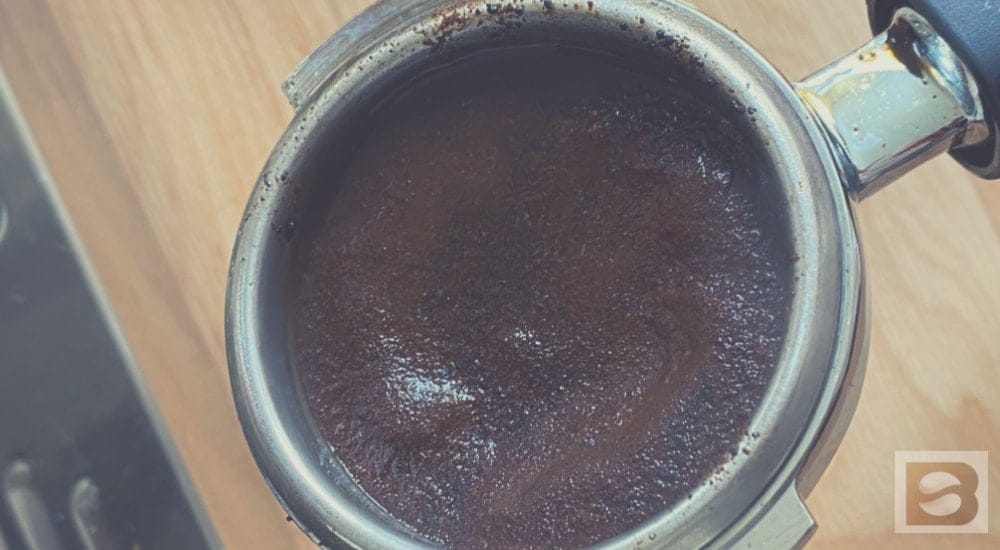
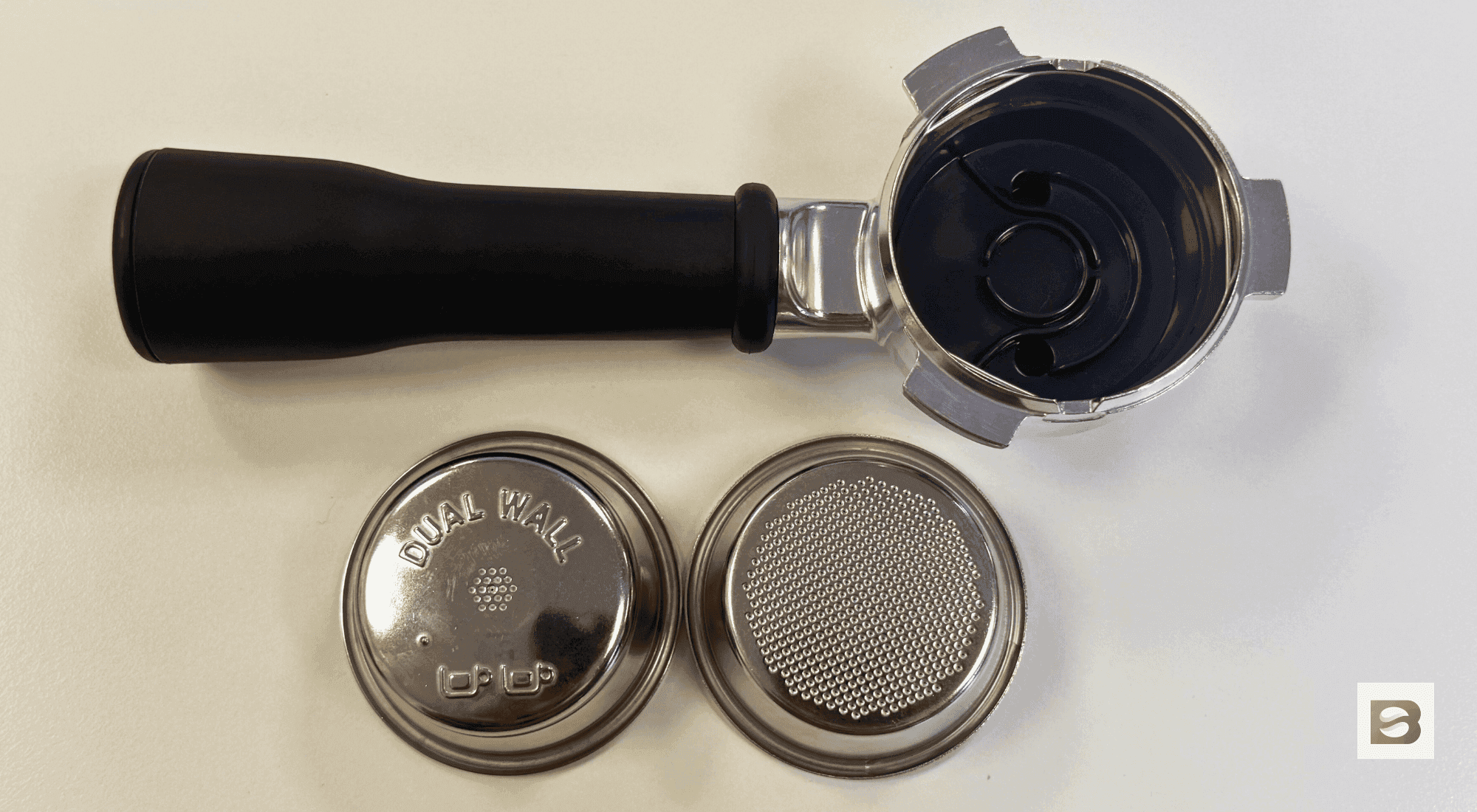
The basket is a small, perforated metal cup that holds your ground coffee during extraction. It sounds simple enough. But what happens inside that basket is anything but.
When high pressure water forces its way through your coffee bed, the basket controls how that water flows. Every microscopic hole in the base is a pathway.
The size of those holes, the number of them, and how evenly they’re distributed across the circular base all determine how water moves through the puck and into your cup.
Get the basket right and water flows evenly, extraction stays consistent, and the shot tastes the way it should. Use a worn-out basket with distorted holes and you get channeling, uneven extraction, and a flat or bitter result.
Most home brewers never consider this, and it’s one of the biggest hidden variables in a home espresso setup.

The Main Espresso Filter Basket Types You Need to Know
There’s more variety in espresso filter baskets than most people realize.
You can categorize them by the number of shots they’re designed for, by how their walls are built, and by how precisely they’re manufactured.
Single, Double, and Triple Baskets
A single basket typically holds between 7g and 14g of coffee. In practice, single baskets are difficult to work with. The shallower coffee bed makes even distribution harder, and dialing in your grind is less forgiving at that dose.
A double basket is the standard for both home and professional use. Depending on the basket, a double handles anywhere from 14g to 22g.
Most home brewers use an 18g or 20g basket as their everyday dose, and for good reason. That dose range gives you a stable puck depth and consistent flow rate.
Triple baskets are less common and typically hold 21g to 24g or more. Unless you’re pulling back-to-back shots at volume all day, you probably don’t need one.
Pressurized vs Non-Pressurized Baskets
A pressurized basket, sometimes called a double-wall basket, has a second layer with a single small hole at the base.
This restricts flow regardless of how the coffee is ground, which builds pressure artificially and creates a crema-like foam in the cup, even from pre-ground coffee or a coarse grind.
For beginners on entry-level machines, a pressurized basket is forgiving and fine.
The problem is it masks what’s really happening in your extraction. You get the look of a proper espresso shot without the substance. Once you have a decent grinder and start dialing in seriously, switch to a non-pressurized basket.
That’s when you actually start tasting what your coffee can do.
Ridged vs Ridgeless
The ridge is a small indent around the outside of the basket that locks it into the portafilter. Ridgeless baskets rely on a tighter fit inside the portafilter instead.
Most precision aftermarket baskets are ridgeless.
That’s worth knowing before you buy, because not every portafilter holds a ridgeless basket securely. Check compatibility first.
Volcanica Coffee Lover Gift Box
The perfect gift box for the average avid coffee drinker, this gift box includes the best-selling products all in one package. Explore the taste of favorite coffees from around the world from the comfort of home.
Coffee Filter Basket Sizes and Portafilter Diameter
Basket size covers two measurements: the diameter and the depth.
Diameter is about compatibility with your machine. Depth determines how much coffee fits before the puck presses against the shower screen.
Here are the most common espresso filter basket sizes by machine type:
| Portafilter Diameter | Common Machines |
|---|---|
| 58mm | La Marzocco, most commercial machines, many Breville models |
| 54mm | Breville Barista Express, Bambino Plus |
| 51mm | Breville Bambino, DeLonghi Dedica |
The 58mm is the industry standard and gives you the widest range of aftermarket options when you’re ready to upgrade.
If your machine runs a 54mm portafilter, your coffee filter basket sizes are more limited, though good options still exist.
How Do I Know What Size Portafilter Basket I Have?
This question comes up constantly. Here’s the short version.
Remove the basket from your portafilter. Use a ruler or calipers to measure the internal diameter across the widest point. That number tells you your basket size.
If you don’t have measuring tools handy, check your machine manual or look up the model online.
The portafilter diameter is almost always listed in the specs, and your basket will match it within a millimetre or two.
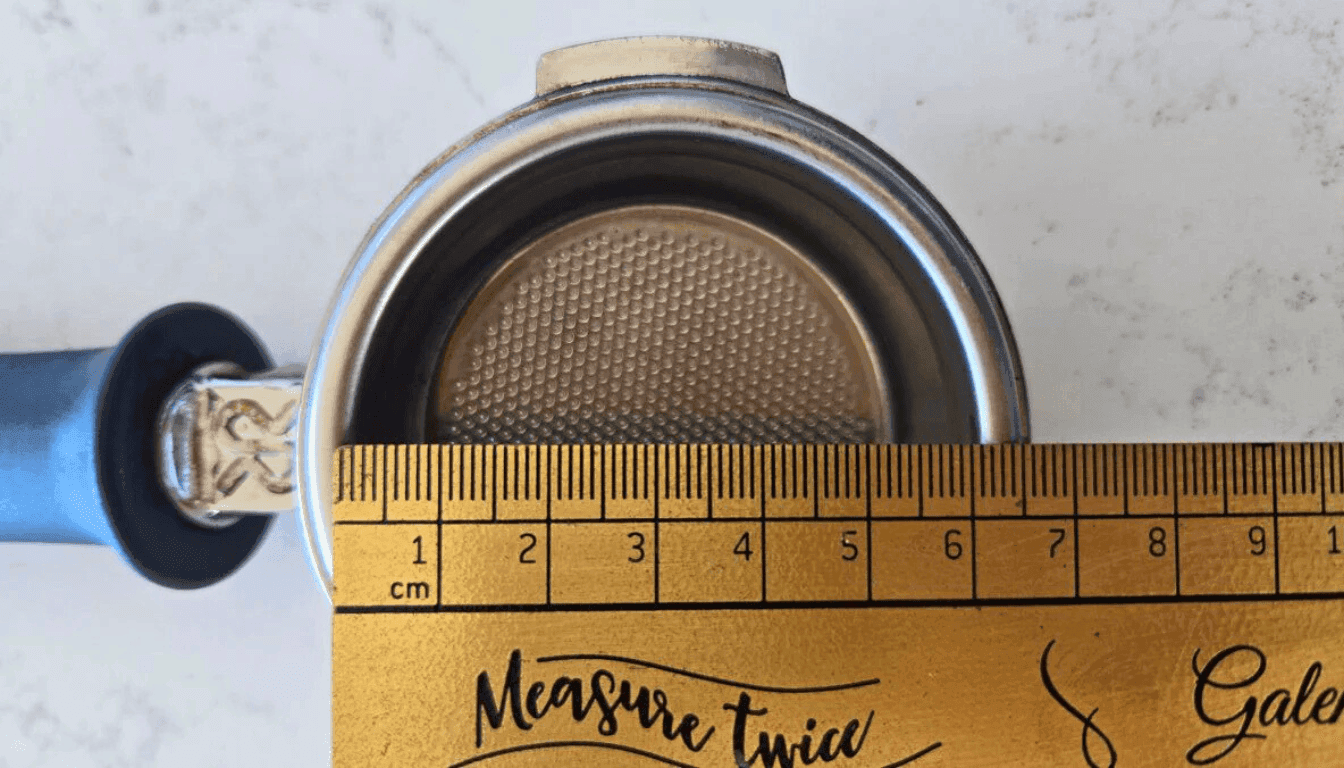
Once you know the diameter and the dose range you’re working with, finding a compatible replacement or upgrade basket is straightforward.
Standard Baskets vs Precision Baskets
This is where things get more interesting. The difference between a standard basket and a precision basket isn’t just a marketing ploy.
A standard basket is stamped from metal and the holes are punched through.
The process leaves slightly rough edges around each microscopic hole, which affects how water flows through the puck and can lead to variability in the extraction of coffee particles.
For casual brewing, it works. For anyone chasing consistency, it can be problematic.
A precision basket, like those made by VST or IMS, is manufactured to much tighter tolerances. The holes have cleaner edges, and the pattern is more uniform across the circular base.

Scott Rao’s research pointed to microscopic hole quality as a genuine factor in shot consistency and flavor clarity. Channeling, which is where high pressure water finds weak spots and cuts through the puck unevenly, is noticeably reduced with a precision basket.
VST baskets have become an industry reference point.
Scott Rao’s work brought them to wider attention, and brands like La Marzocco and Decent Espresso have used VST as their standard basket supplier. IMS is another strong option and is popular in barista competition setups.
What almost nobody talks about is basket wear.
Over time, even a quality basket’s holes distort from repeated cleaning, backflushing, and general use. If your shots have drifted without an obvious reason and you’ve had the same basket for years, testing with another basket is worth doing.
A close inspection under good light often reveals visible wear around the hole edges.
Upgrading to a VST or IMS precision basket is a genuine game-changer once you already have a solid grinder and are working with fresh espresso coffee.
It won’t fix poor technique, but it removes one more variable from the equation.
So, Which Portafilter Basket Should You Use?
If you’re just starting out, the pressurized double basket that came with your espresso machine is fine.
Focus on your grind and your technique before worrying about basket upgrades.
Once you’re comfortable and want more control, move to a non-pressurized 18g or 20g basket. Calibrate your grinder to the new basket, take notes, and pay attention to how your flow rate and yield change.
If you want to go further, a VST or IMS precision basket matched to your portafilter diameter is the next logical step.
Pair it with a bottomless portafilter to diagnose your extraction visually, and you’ll have a setup that can genuinely hold its own against what a professional is using.
After two decades in commercial machines, I can tell you that the basket is one of the first things I look at when a shot isn’t behaving.
It’s small, it’s cheap to replace, and it’s responsible for more extraction problems than most people ever suspect. Start there.
Final Thoughts
The portafilter basket rarely gets the attention it deserves, but I hope this post changes that.
Whether you’re pulling shots on a home machine or managing a busy espresso bar, the basket you choose and how well you maintain it has a real impact on what ends up in the cup.
Start with the right size for your machine, match the dose to the basket, and don’t overlook wear over time. If you’re serious about improving your espresso and you haven’t looked at a precision basket yet, that’s your next move.
Small upgrade. Big difference.