All products are independently selected by our editors. If you buy something, we may earn an affiliate commission. Learn More >
The first time someone handed me a cup of natural process Ethiopian and told me to expect blueberry, I thought they were setting me up for a joke. I’d spent years pulling shots and pouring drip in hotel kitchens across the UK and the Middle East, and coffee had always tasted like, well, coffee. Roasted, bitter, maybe a little nutty if you were lucky.
Then I tasted it. Blueberry. Not “sort of like it if you squint.” Actual, unmistakable blueberry. No syrup added or flavoring. Just coffee.
That cup changed how I think about this drink, and it’s why I still get asked the same question after twenty years in the trade. How does coffee taste like fruit when nobody added any?
Coffee Starts Life as a Fruit, and That Never Fully Leaves It
Coffee doesn’t start as a bean. It starts as a cherry.
Before roasting, before grinding, before any of it, the coffee “bean” is a seed sitting inside a ripe fruit that looks a lot like a small cranberry.
That fruit has pulp, sugar, and juice, and the seed sits right in the middle of it, soaking in all that flavor while it develops.
So when you taste something fruity in your cup, you’re not imagining a flavor that was never there. You’re picking up on natural coffee flavor notes that got built into the seed months before anyone ever roasted it.
This is the foundation for everything else in this article. The fruit, the processing, the growing conditions, all of it works on a seed that already has fruit-derived compounds locked inside it.
Coffee Acidity Types Are Doing More Work Than You Think
Acidity gets a bad reputation in coffee. People hear “acidic” and think sour, harsh, maybe even a bit off. That’s a shame, because acidity is often the exact thing giving you that fruity character you’re chasing.
Coffee carries several different coffee acidity types, and each one reads differently on your palate.
- Citric acid tastes bright and citrusy, think orange or lemon zest
- Malic acid gives you that crisp apple or pear character
- Phosphoric acid adds a clean, almost cola-like snap
- Chlorogenic acid is more subtle, contributing body and a slight tartness that ties everything together
Different growing conditions and processing methods shift the balance of these acids. A coffee heavy on malic acid might remind you of green apple.
One with more citric acid can taste like it’s got orange peel folded into the cup. This is the mechanism behind a huge chunk of what people describe as fruity, and it’s rarely explained in plain terms.
Why Your Coffee Tastes Sour Instead of Fruity
This is where a lot of home brewers get stuck, and I get asked about it constantly. Sour and fruity sit close together on the flavor map, but they’re not the same thing.
Fruity acidity feels balanced. It arrives, it’s bright, and then it settles into sweetness or body. Sour acidity feels sharp and unresolved. It bites and then just sits there, without anything rounding it out.
Most of the time, sourness comes down to one of two things. Either the cherries were picked before they fully ripened, which means the sugars never developed enough to balance the acids, or the coffee was under-extracted during brewing, which leaves you with the sharp, acidic compounds without the sweetness and body that should accompany them.
Try a slightly finer grind or a longer brew time before you write off a coffee as “too sour.” You might just be pulling out the acid without the rest of the flavor that’s supposed to come with it.

Coffee Cherry Processing Decides How Much Fruit Comes Through
If acidity sets the type of fruit flavor, processing decides how loud that flavor gets. Coffee cherry processing is the single biggest lever for fruitiness, and it comes down to how much contact the seed has with the fruit around it after picking.
Washed coffee strips the fruit away almost immediately. The cherry gets pulped, fermented briefly in water, then washed clean before drying.
This produces a cleaner, more precise cup where you taste the seed’s own character without much cherry influence.
Natural processing does the opposite. The whole cherry dries around the seed for days or weeks, and during that time, sugars and fruit compounds migrate straight into it.
This is why natural process coffees so often taste like berries, wine, or even tropical fruit. The seed has been marinating in fruit the entire time.
Honey processing sits in the middle, with some of the sticky fruit pulp left on during drying, giving you a cup that’s sweeter and rounder than washed but not as wild as natural.
Terroir in Coffee, or Why the Same Variety Tastes Different by Region
Plant the exact same coffee variety in two different places and you’ll get two different cups. That’s terroir in coffee, and it works the same way it does with wine grapes.
Altitude plays a massive role. Coffee grown higher up develops more slowly because the air is cooler, and that slower development gives the cherry more time to build complex sugars and acids.
This is a big part of why so much single origin fruity coffee comes from high altitude regions in places like Ethiopia, Colombia, and Kenya.
Soil composition matters too. Volcanic soil tends to produce brighter, more mineral-forward cups. Climate and rainfall patterns shift how quickly cherries ripen, which affects sugar content.
None of this is marketing language. It’s agriculture, and it shows up directly in your cup.
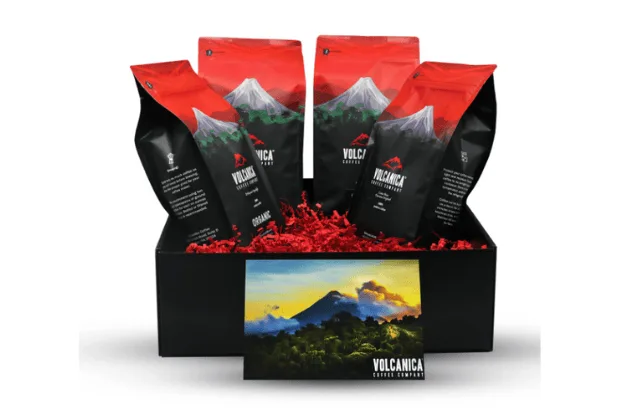
Volcanica Coffee Lover Gift Box
The perfect gift box for the average avid coffee drinker, this gift box includes the best-selling products all in one package. Explore the taste of favorite coffees from around the world from the comfort of home.
The Coffee Plant’s Genetics Set the Ceiling
Terroir and processing can only work with what the plant gives them. Genetics set the upper limit on how fruity a coffee can possibly become.
Some varieties are famous for it. Gesha, originally from Ethiopia and now grown around the world, produces some of the most intensely floral and fruity coffees on the planet, jasmine, bergamot, stone fruit, all from genetics alone.
Ethiopian heirloom varieties, which aren’t even a single defined variety but a huge genetic pool of wild and semi-wild plants, carry an incredible range of natural fruit character. Kenyan varieties like SL28 are known for bold blackcurrant and citrus notes that show up almost no matter how they’re processed.
So when you see a coffee bag proudly listing its variety alongside its tasting notes, that’s not filler information.
It’s telling you what kind of fruit expression was genetically possible before the farmer or roaster ever touched it.
Why Does Light Roast Coffee Taste Like Fruit
Roasting is where all of this either gets preserved or destroyed, and roast level makes a dramatic difference.
Light roasting stops the process early, before the sugars have a chance to caramelize heavily and before the delicate aromatic compounds break down.
This preserves the original acidity and the fruit-forward character built up through genetics, terroir, and processing. That’s why light roasts are so often the ones carrying berry, citrus, or stone fruit notes.
Push the roast further and those same compounds start to degrade. Sugars caramelize into deeper, heavier flavors. The delicate aromatics that carried fruit character break down and get replaced by roastier, more bitter compounds.
By the time you hit a dark roast, most of that fruit expression is gone, replaced by smoke and char. Neither approach is wrong, but if you’re chasing fruity flavor, roast level is one of the first things to check.
Does Fruity Coffee Have Added Flavor or Syrup
I’ll answer this one directly because it comes up more than almost anything else. No, quality fruity coffee has nothing added to it.
Flavored coffee is a completely different product. It’s made by coating roasted beans in flavoring oils after the fact, the same way you’d flavor a syrup.
You can usually smell it before you even brew it, and it tends to taste one-dimensional, more like an air freshener than an actual fruit.
Naturally fruity coffee comes entirely from what we’ve covered here. Cherry composition, processing, terroir, genetics, and roast level.
It’s chemistry and agriculture working together, not a bottle of syrup added at the end. If you want to check for yourself, look at the bag. Flavored coffee will almost always say so directly, because producers know that’s a selling point worth advertising.
How to Taste Fruit Notes in Black Coffee
Finding fruit notes in your cup is a skill, and like any skill, it gets easier with practice.
Start by smelling the coffee before you drink it. A lot of fruit character shows up in aroma before it ever reaches your tongue. When you do taste it, try slurping a small amount so it aerates across your palate rather than just sipping normally.
This spreads the coffee across more of your tongue and pushes aroma up into your nasal cavity, which is where a huge amount of flavor perception actually happens.
Pay attention as the coffee cools too. Flavors shift as temperature drops, and fruit notes often become clearer once a cup isn’t piping hot anymore.
Tasting two coffees side by side also helps enormously, since your palate calibrates better with a direct comparison than it does tasting one coffee in isolation.
Is Fruity Coffee Naturally Sweet
Sweetness in coffee confuses people because there’s no added sugar involved, yet a good natural process coffee can taste noticeably sweet.
That sweetness is perceived rather than measured on a sugar scale you’d recognize from baking. It comes from the balance between acidity and bitterness.
When acids are well developed and bitterness stays low, your brain reads that combination as sweetness, the same way a ripe strawberry tastes sweeter than an unripe one even though the actual sugar difference might be smaller than you’d expect.
Higher quality cherries, picked at peak ripeness, genuinely do carry more natural sugar into the seed, and that sugar does contribute directly to what you taste.
But a lot of what reads as sweetness in your cup is really about balance, not raw sugar content.



Final Thoughts
Fruity coffee isn’t a trend, and it isn’t a trick. It’s coffee doing exactly what a fruit-bearing plant is capable of doing when genetics, terroir, processing, and roasting all line up.
Once you understand the mechanics behind it, that blueberry note in your cup stops feeling like magic and starts feeling like what it actually is, good agriculture and good craft meeting in the right cup.
Next time you spot a fruity tasting note on a bag, don’t dismiss it. Brew it slow, smell it before you sip, and see what you actually find. You might be surprised how much is really in there.