All products are independently selected by our editors. If you buy something, we may earn an affiliate commission. Learn More >
If you’ve ever stood at a coffee shop counter wondering about the difference between a breve and a latte, you’re in good company.
Sure, they look alike, they’re both espresso-based, and they both arrive with a generous pour of dairy. But order one when you meant the other, and you’ll notice the gap on your very first sip.
The difference between breve and latte is actually straightforward once you know what to look for. One ingredient separates them, but that single swap changes the flavor, texture, calorie count, and even how clearly the espresso comes through.
If you’ve been asking what’s the difference between a breve and a latte, this is the answer you’ve been looking for.
So, What Is a Caffè Breve?

The caffè breve is America’s take on the Italian latte, and the key change is in the dairy. Instead of steamed milk, it uses half-and-half, a blend of equal parts whole milk and cream that typically contains between 10.5% and 18% fat.
That higher fat content is what gives a breve its thick, velvety texture and rich, almost dessert-like quality.
The ratio of espresso to half-and-half in a breve runs at roughly 1:1, which means the coffee flavor punches through more clearly than you’d expect from such a creamy drink.
You get the richness of the dairy without losing the espresso underneath it.
One thing most people don’t realize: steaming half-and-half produces a different kind of foam than steaming regular milk. Fat molecules disrupt the formation of air bubbles, so breve foam is denser and shorter-lived.
It sits closer to cappuccino foam in thickness than to the light, silky layer you find on a latte, which is also why you rarely see latte art on a breve.
The foam simply doesn’t stretch or flow the same way.
There’s another subtle effect worth knowing. When half-and-half steams, heat causes the fat and lactose to interact in a way that creates a mild, natural sweetness, a faint caramel quality that doesn’t come from added syrup.
A well-made breve honestly doesn’t need one.
Ok, So What Is a Latte?

The latte is the most ordered espresso-based drink in the world, and it earned that title for good reason.
It’s made with steamed whole milk or 2% milk at around 3.5% fat, and the espresso-to-milk ratio typically runs 1:3 or higher.
That extra steamed milk softens the espresso and creates a smooth, mellow drink that works well as a daily coffee without overwhelming you.
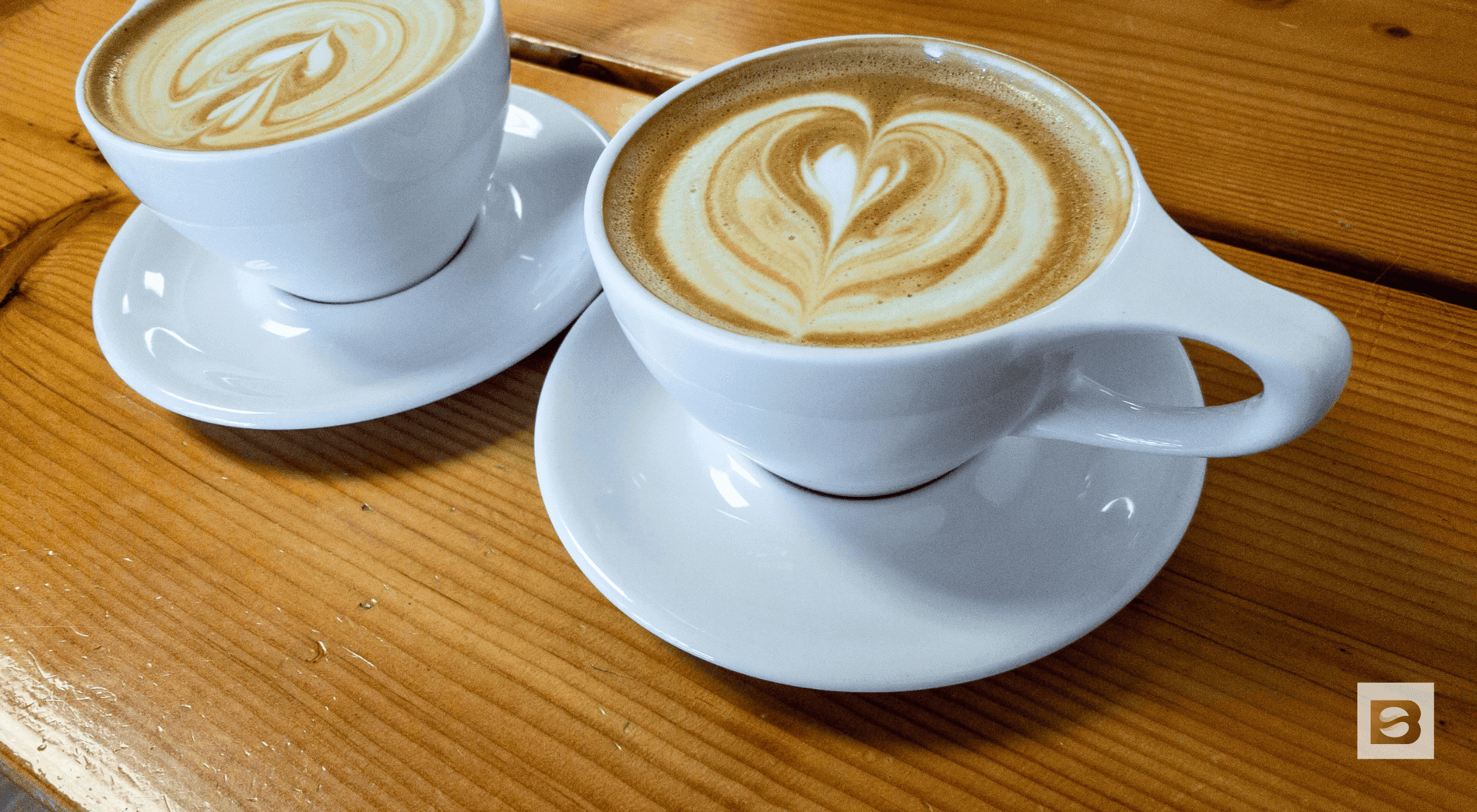
Because whole milk steams into a lighter, more fluid foam, lattes are far better suited to latte art than breves. The milk proteins stretch and thin in a way that lets baristas pour clean, detailed patterns.
The flavor is subtler and more balanced, espresso is present but not dominant, which makes a latte a natural canvas for flavored syrups like vanilla, hazelnut, or white chocolate.
Breve vs Latte: The Key Differences That Actually Matter
The gap between these two drinks isn’t just about which dairy you pour in. It ripples through the flavor, texture, appearance, and calorie count of the finished cup.
| Breve | Latte | |
|---|---|---|
| Dairy | Half-and-half | Whole or 2% milk |
| Fat content | 10.5–18% | 3.5% |
| Espresso ratio | 1:1 | 1:3 |
| Foam | Dense, thick | Light, silky |
| Calories (12 oz) | ~420 | ~150 |
| Flavor | Rich, bold, slightly sweet | Smooth, mild, versatile |



One thing that surprises most people is that a breve tastes bolder, not softer, despite having more dairy. That comes down to the ratio.
With equal parts espresso and half-and-half, the coffee flavor isn’t diluted the way it is in a latte’s much larger volume of milk. The fat carries and amplifies flavor rather than muting it.
Lattes also translate well to non-dairy milks like oat, almond, and soy, because those alternatives steam similarly to cow’s milk.
Breve coffee doesn’t make that leap as easily. Non-dairy half-and-half alternatives behave differently under steam, and the result is rarely as satisfying.
One angle that rarely gets mentioned when people talk about the two espresso based drinks is roast pairing.
A breve’s richness can handle a darker roast without tipping into bitterness. The cream rounds off the sharper edges.
A latte is better balanced with a medium or medium-dark roast, where the espresso’s natural character still has room to come through without the dairy steamrolling it.
Is a Breve or Latte Healthier?
This is one of the most common questions I get, and the honest answer depends on what “healthy” means for you specifically.
A 12-ounce breve has around 420 calories and roughly 37 grams of fat. A latte the same size made with 2% milk has about 150 calories and 7 grams of fat.
If you’re watching overall calorie intake, the latte is the clearer choice. It works as a daily coffee drink without much dietary impact, and it delivers more protein and calcium compared to a breve.
That said, if you follow a high-fat, low-carb diet like keto, the breve actually fits better. Half-and-half is lower in carbohydrates than milk, and the higher fat content keeps you full for longer.
For that way of eating, a breve isn’t a guilty indulgence. It’s a practical fit.
So when people ask whether a breve or latte is healthier, the real question worth asking is: healthier for which goal?
Which One Should You Order?
Choosing between a latte or breve, or deciding where they both sit against something sweeter like a mocha, comes down to what you want from your cup on any given day.
When you put breve vs latte vs mocha side by side, the breve is the richest and most coffee-forward, the latte is the lightest and most flexible, and the mocha brings chocolate sweetness into the equation.
Three very different coffee experiences sharing the same espresso base.
Order a breve if you’re treating yourself to something rich and satisfying, you’d rather skip the syrup, or you want a smaller drink that still delivers serious flavor.
It earns its place as a weekend ritual rather than a daily habit. Not because it’s off-limits, but because it’s worth slowing down to enjoy.
Order a latte if you want a reliable, lighter daily coffee that works well with flavor additions and suits a range of milk options. It’s the more versatile of the two, and it’s been the backbone of coffee culture for decades for that very reason.
If you’ve only ever ordered lattes, a breve is worth trying at least once. Just go in knowing it’s a different experience, richer, bolder, and considerably more filling.
Making a Breve Coffee at Home
You don’t need a full coffee shop setup to make a solid breve at home. A quality espresso machine handles the coffee side of things, and a milk frother, either a steam wand or a handheld frother, takes care of the half-and-half.
Pull your espresso shot first. Then steam the half and half to around 150°F. Go higher and it scorches, which kills that natural caramelized sweetness you’re aiming for.
Pour the steamed half-and-half over your espresso and spoon the dense foam on top.
One practical note: half-and-half froths faster than regular milk and breaks down more quickly once poured. Work efficiently, and drink it while it’s still fresh. A breve doesn’t wait around.
Final Thoughts
The difference between a breve and a latte comes down to one ingredient, but that ingredient changes everything: the texture, the flavor, the calorie count, and how boldly the espresso comes through.
A latte is your dependable, everyday option.
A breve is something more indulgent, made to be sipped slowly rather than knocked back on a Tuesday morning commute.
If you’ve never tried a breve coffee, it’s one of those drinks that genuinely catches people off guard the first time. Go in without expectations and see which side of the breve vs latte debate you land on.