All products are independently selected by our editors. If you buy something, we may earn an affiliate commission. Learn More >
Everywhere you look, someone is telling you to time your coffee.
Four minutes for this. Thirty seconds for that. Start the timer the moment water hits the grounds, stop it the second the last drip falls.
Miss it by a few seconds, and apparently, your coffee is ruined. Listen, timing matters. But not in the way most articles make it sound.
If you have ever followed a brew time perfectly and still ended up with a cup that tasted flat, sour, or harsh, you already know the truth.
Timing alone does not make good coffee. What it does is tell you a story about what is happening in your brew.
Once you understand that story, timing becomes useful instead of stressful.
So, Why Do People Time Their Coffee?
Most of us start timing because we are told to.
Recipes say to do it, YouTube videos show it, and coffee gear often has a timer baked in.
It feels official, like you are doing things properly.
Timing exists because brewing coffee is really about extraction. Water pulls soluble compounds out of the coffee grounds, some pleasant, some not. Time gives those compounds a chance to dissolve.
But time is not the thing doing the work. Water, temperature, grind size, and contact all play bigger roles.
What Timing Your Coffee Actually Measures
Timing is a rough measurement of how long water and coffee interact.
Short contact times usually mean fewer compounds extracted. That is where sour, sharp, hollow flavors tend to live.
Longer contact times pull out more material, which can push a brew toward bitterness, dryness, or that chalky aftertaste nobody enjoys.
The key thing to understand is this, time is not flavor. It is a signal.
When your coffee tastes off, the brew time gives you a clue about why.

Why You Can’t “Control” Brew Time
You do not really control time directly. You influence it.
Change your grind size and your brew time changes. Pour faster or slower and time shifts. Use hotter water and extraction speeds up even if the timer stays the same.
This is where most generic advice gets it wrong. They treat brew time as the main variable, when it is really the result of several others working together.
If you chase time without understanding what caused it, you end up adjusting the wrong thing.
When Timing Your Coffee Really Matters
Timing matters most when you are learning, troubleshooting, or trying to repeat a good cup. It matters less once you know your setup and trust your taste.
Let’s break that down by brew style.
Pour Over Coffee and Other Manual Brews
This is where timers earn their keep.
With pour over brewing, water flows through the coffee bed. The speed of that flow tells you a lot. If your brew finishes much faster than expected, water probably rushed through too easily.
That often points to a grind that is too coarse or uneven pouring.
If it drags on forever, something is slowing things down. The grind may be too fine, the filter may be clogged, or the coffee bed may have compacted.
Timing here is not about hitting an exact number. It is about noticing changes.
If your usual brew finishes in three minutes and today it takes four, something changed. That is useful information.
Espresso
Espresso timing gets talked about more than almost any other brew method, and for good reason.
Everything happens fast, and small changes show up immediately in the cup.
That said, timing espresso without watching flow or taste is still a mistake.
A thirty second shot can taste wildly different depending on grind size, dose, and puck prep. Time alone does not guarantee balance.
What timing does well with espresso is help you spot inconsistency. If your shots swing from twenty seconds to forty with no recipe change, something in your process is unstable.
The timer does not fix the problem, it points you toward it.
Immersion Methods Like French Press and Cold Brew
This is where people often overthink timing.
With immersion brewing, coffee and water sit together for a set period. The extraction curve is gentler and more forgiving. Being off by thirty seconds rarely ruins anything.
Here, timing works best as a range rather than a rule.
Four minutes for French press is a starting point, and not set in stone. If five minutes tastes better to you, that is not wrong.
Cold brew is even looser. Twelve hours, sixteen hours, twenty hours, these are all valid depending on grind, ratio, and taste preference.
Timing matters, but precision matters less.
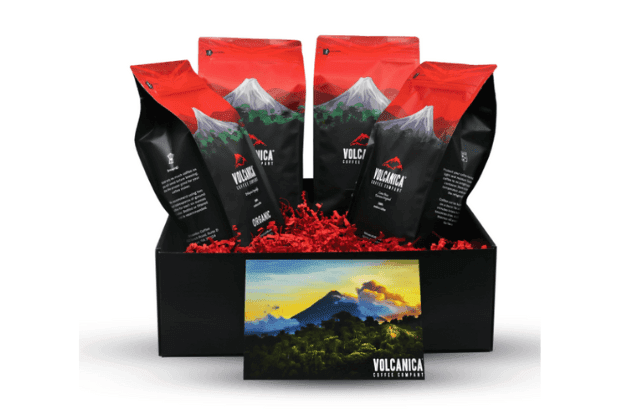
Volcanica Coffee Lover Gift Box
The perfect gift box for the average avid coffee drinker, this gift box includes the best-selling products all in one package. Explore the taste of favorite coffees from around the world from the comfort of home.
Timing Versus Taste – Which Should You Trust?
Always trust taste first.
If your coffee tastes good, the timer did its job even if the number looks strange. If it tastes bad, hitting the right time did not save it.
One of the biggest gaps in most coffee advice is failing to say this clearly. Brew time is not a scorecard.
It is feedback. And your palate is the final judge.

How to Tell What’s Going Wrong without Timing It
Once you move past beginner mode, timing should stop being your only reference. There are better signals right in front of you.
Flow and Visual Cues
Watch how the coffee drains. Is it steady or sputtering? Does it stall halfway through? Does it gush at the start?
Look at the color.
Early drips are darker and thicker. Later ones get lighter and thinner.
If most of your brew finishes pale and watery, you are probably over extracting the tail end.
These visual cues often explain flavor problems faster than the timer does.
Taste Changes Over Time
If you want to understand timing properly, taste your coffee at different points in the brew.
This sounds nerdy, but it is eye opening.
Early extraction tastes sour and thin. Mid extraction brings sweetness and balance. Late extraction adds bitterness and dryness.
Once you taste those stages, you stop obsessing over seconds and start brewing with intention.
When timing stops being useful
Once you know how your grinder behaves, how your kettle pours, and how your brewer drains, you can loosen up.
At that point, timing simply becomes a confirmation tool. You glance at it, nod, and move on.
How Timing Keeps Your Coffee Consistent
Consistency is where timing shines.
If you want to make the same good cup every morning, timing helps you recreate conditions. It lets you notice drift before flavor suffers.
If yesterday’s great brew took three minutes and today’s takes two, you have a clue before you even taste it.
This is why professionals use timers.
Not because time creates quality, but because consistency affirms you’re doing things like you want to and they’re being repeated.
A Simple Way to Use Timing to Improve Your Coffee
If you want timing to actually help instead of confuse you, try this.
Pick one brew method you use often.
Pour over works well.
Brew three cups on different days using the same coffee and ratio. Change only grind size slightly each time.
Note the brew time and taste.
One will likely run fast and taste sharp. One will drag and taste heavy or bitter. One will feel just right.
That middle cup is your reference point. The time is not the goal, the taste is. From then on, timing helps you get back to that taste.
Common Timing Myths That Hold People Back
Let’s clear a few things up.
There is no universal perfect brew time. Your grinder, coffee, and technique all matter.
Being a few seconds off rarely ruins a brew. Big flavor problems usually come from grind size, water temperature, or ratio.
You do not need to time forever. Use it while learning, then relax.


So, Is Timing Your Coffee Really Necessary?
Yes, but not the way most people think.
Timing is necessary as a learning tool, a consistency check, and a troubleshooting aid. It is not necessary as a rigid rule that decides whether your coffee is good or bad.
Good coffee comes from understanding what timing represents, not worshipping the stopwatch.
If you use time as feedback instead of pressure, your brewing gets calmer, more confident, and far more enjoyable.
And honestly, that is the whole point of making coffee at home in the first place.