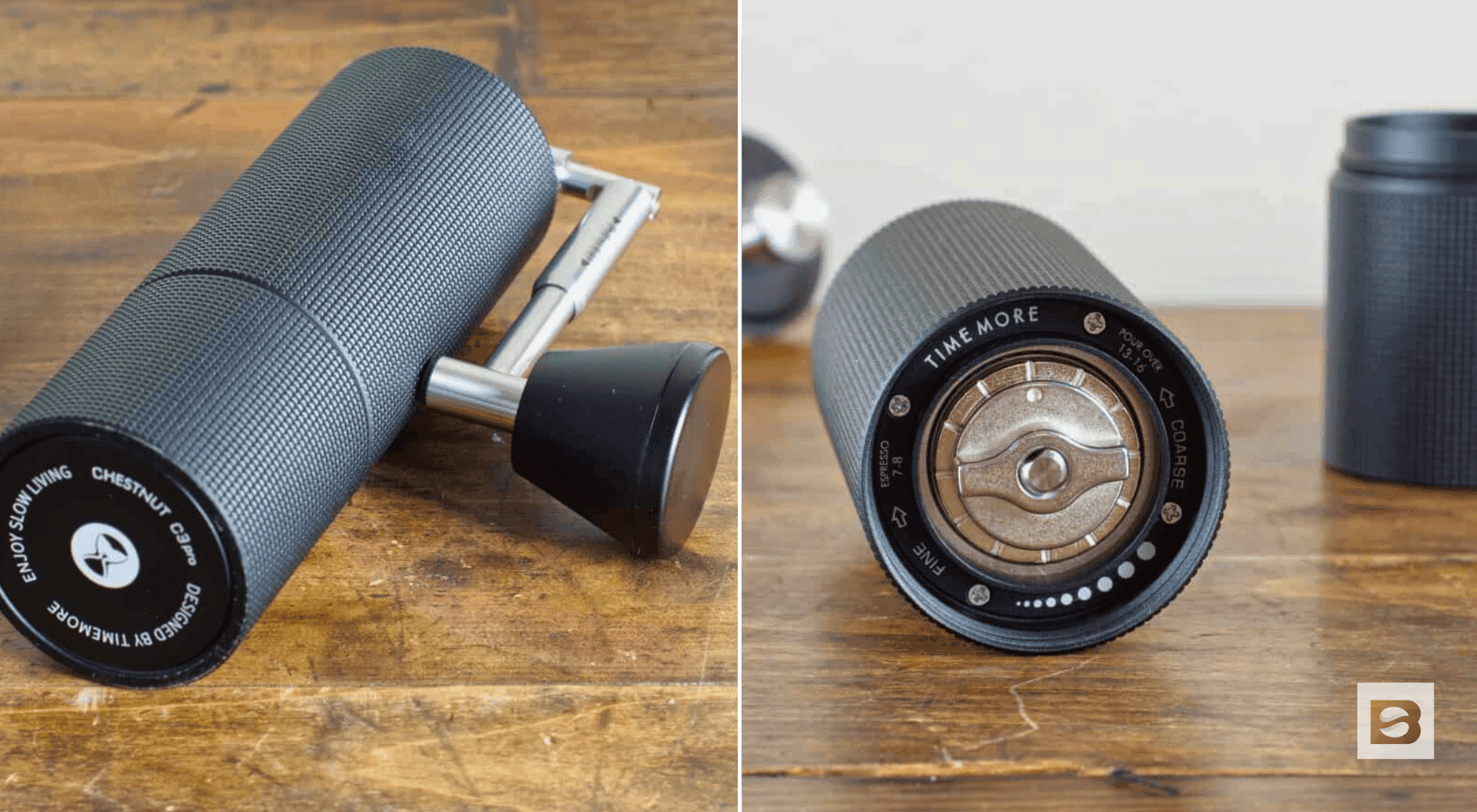
All products are independently selected by our editors. If you buy something, we may earn an affiliate commission. Learn More >
If you’re in the market for a manual coffee grinder, you’ve probably run into the names Timemore C2 and Timemore C3. They look almost identical, both get rave reviews, and both promise café-level consistency. So which one should you buy?
I use the C3 every day, and I’ve spent plenty of time testing the C2 as well.
This guide breaks down what really separates these two popular hand grinders, from build and burr design to grind quality and everyday use, so you can confidently choose the one that fits your brew routine.
Understanding the Timemore Chestnut Models
Before diving into specs, it helps to know how the C2 and C3 fit into the Timemore lineup.
Timemore made a name for itself by building premium-feeling manual grinders that don’t cost a fortune. The Chestnut series is their most recognized line, and both the C2 and C3 sit right at the sweet spot between affordability and performance.
The Timemore C2 was the model that started it all. It delivered excellent grind quality for its price, making it a favorite among beginners, traveling brewers, and coffee enthusiasts.
A few years later, the Timemore C3 arrived with subtle but meaningful upgrades: better burrs, tighter tolerances, and a more durable all-metal body.
Timemore C2 vs C3: Quick Comparison Table
Before we look at the finer details, here’s a side-by-side overview of the two grinders. It highlights what’s new, what stayed the same, and where each model shines.
| Feature | Timemore C2 | Timemore C3 |
|---|---|---|
| Body / Build | Aluminum body with some plastic components | Full aluminum body, sturdier and more premium feel |
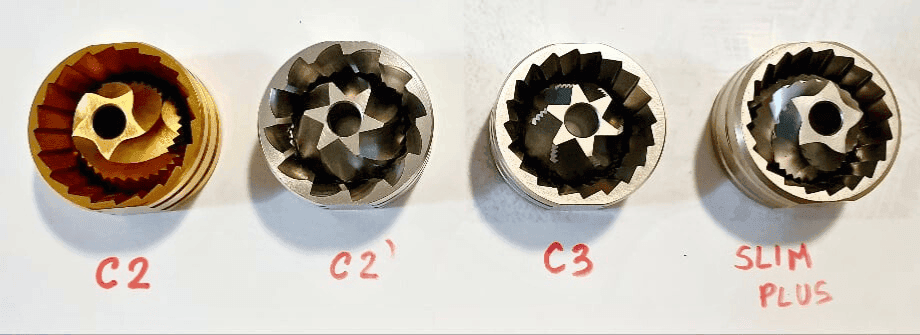
| Burr Type | Standard 38 mm stainless-steel conical burrs | Upgraded 38 mm S2C (Spike-to-Cut) burr set for improved consistency |
| Grind Adjustment | Stepped dial with moderate increments for a tailored grinding experience. | Stepped dial with tighter tolerances and more precision |
| Grind Consistency | Excellent for filter and immersion brews | Noticeably better uniformity across all grind sizes |
| Espresso Capability | Limited, struggles with fine settings | Can grind fine enough for espresso with some effort |
| Capacity | Around 25 g of coffee beans | Around 25 g of coffee beans |
| Grinding Speed | Slightly faster at coarse settings | Slightly slower due to finer burr geometry |
| Weight | Around 430 g | Around 475 g |
| Ease of Cleaning | Simple disassembly and reassembly | Same design, tighter build tolerances |
| Price Range | Lower, great budget option | Slightly higher for upgraded performance |
| Best For | Drip, pour-over, and French press | Filter brewers who want more consistency or dabble in espresso |
Build and Design Quality of Both Timemore Chestnut Grinders
Let’s start with how these grinders feel in your hand.
The C2 is light, simple, and reliable. It’s easy to carry, quick to clean, and still feels solid for the price. Some parts, like the internal supports, use durable plastic, which helps reduce weight but gives it a slightly less premium feel.
The C3, by contrast, is heavier and more refined, appealing to serious coffee lovers. Its all-metal construction and textured surface make it feel more substantial and grippy. The handle turns smoothly, and the overall build feels tighter and more stable.
If portability is your top priority, the C2 is the winner. But if you prefer a grinder that feels built to last, the C3 has the edge.
Burr Set and Grind Quality
The burrs are the heart of any coffee grinder, and this is where the biggest leap forward happens.
The Timemore C2 uses a classic 38 mm stainless-steel conical burr set. It’s efficient and sharp, producing an even grind for most brew methods. But at finer settings, especially near espresso range, it starts to struggle with uniformity.
The C3 introduces the S2C burrs, short for “Spike-to-Cut.” These new burrs crush the beans before slicing them, which helps eliminate large boulders and fines.
In practice, this means more consistent particle size and better extraction.
In daily use, I can taste the difference.
The Timemore Chestnut C3 gives me clearer, cleaner cups, particularly with pour-over and AeroPress brews, making it a top choice for most coffee lovers.
Flavors pop more, and the finish feels smoother. The C2 still does a fantastic job for its price, but the C3 feels like it’s working on another level.
Grind Adjustment and Range
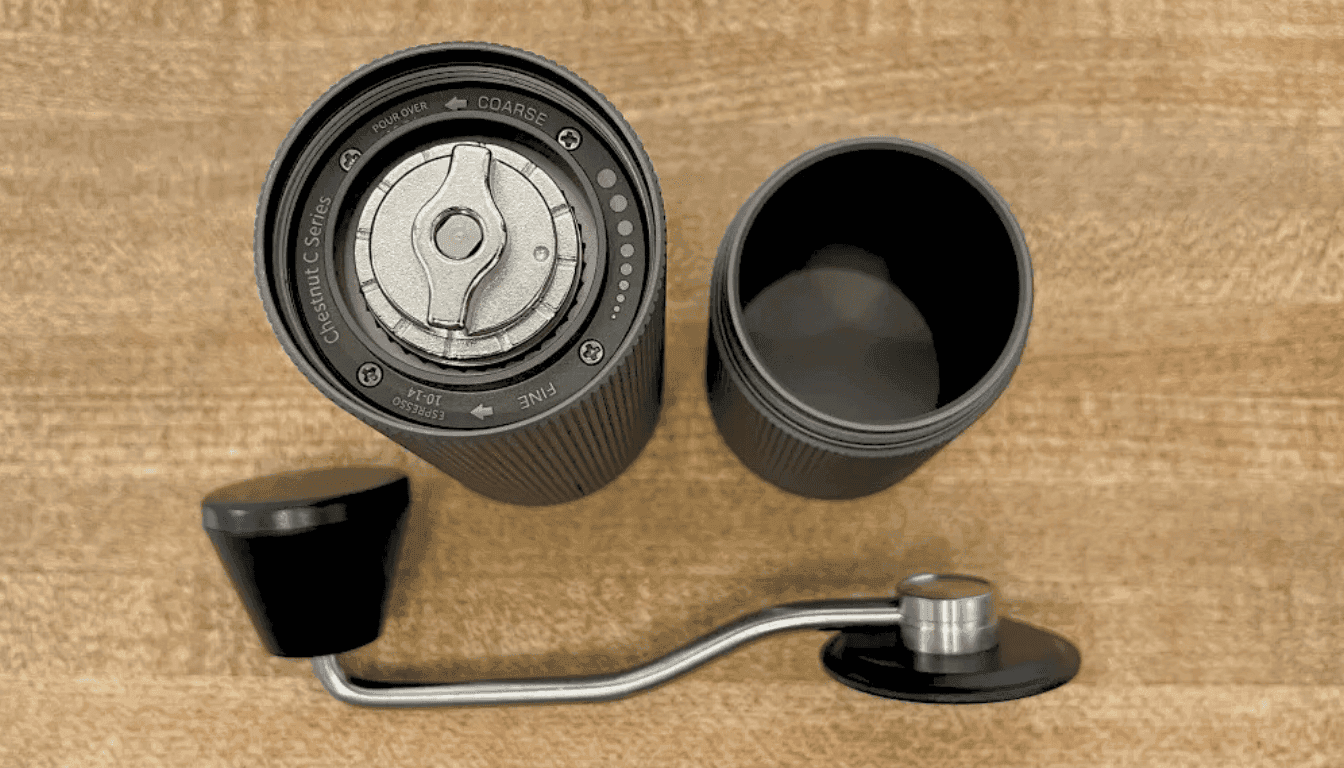
Both grinders use a stepped adjustment dial at the bottom of the burr set, allowing you to tweak grind size in small clicks.
On the C2, those clicks are slightly larger. It’s easy to adjust for French press or pour-over, but it can be tricky when you need fine control for espresso.
The C3’s dial has tighter steps, so each click changes the grind size by a smaller margin. That extra precision helps when you’re dialing in for lighter roasts or switching between brew methods.
For everyday brewing, both work well. But if you love experimenting or need fine-tuning, the C3 makes that process smoother.
Grind Performance in Daily Use
Now for the part that really matters, how each grinder performs when you’re actually brewing coffee.
The C2 is quick and efficient. It grinds coarse coffee for a French press in under a minute, and it’s lightweight enough to hold comfortably for multiple brews.
The C3 The Timemore C3 takes a few seconds longer, but the difference in grind consistency makes it worthwhile for those serious about specialty coffee. With the S2C burrs, the grounds feel more even to the touch and brew more predictably.
In blind taste tests I’ve run at home, the C3 produces cups with better clarity and balance. The C2 gives a slightly muddier body, though still very drinkable.
When it comes to espresso, both grinders can technically handle it, but only the C3 produces a grind fine and consistent enough for reliable results.
It’s still not a dedicated espresso grinder, but it’s far more capable if you like to experiment.
What I Love and What to Watch Out For
Every grinder has its strengths and quirks. Here’s how the Timemore Chestnut C2 and C3 stack up once you’ve used them for a while.
Timemore C2

Before the C3 came along, this was my go-to recommendation for anyone stepping into manual brewing for the first time.
The C2 proved that you didn’t need to spend a fortune to get genuinely good grind quality. It offered precision, portability, and dependability in a package that felt approachable for beginners but capable enough for seasoned brewers.
I’ve always liked how straightforward it is.
You can pick it up, start grinding, and get a consistent cup right away. The burrs bite through beans smoothly, the handle feels balanced, and the grind adjustment system is simple to understand.
It’s a grinder that makes coffee feel easy again, especially if you’re learning the ropes of pour-over or French press brewing.
For travelers or minimalists, it’s hard to beat.
It fits neatly in a backpack, doesn’t weigh much, and can handle everything from coarse to medium-fine settings with confidence. It might not have the engineering polish of newer models, but it nails the fundamentals, consistent grind, fast workflow, and reliability you can count on.
What I Love
- Great value for the money.
- Fast and easy to use.
- Consistent for pour-over and French press.
- Lightweight, ideal for travel.
Take Note
- Not suitable for consistent espresso grinds.
- Some models use plastic internals.
- Larger grind-size jumps between clicks.
Timemore C3

Owning the C3 has shown me just how much difference small refinements can make once you’ve spent time brewing with manual grinders.
At first glance, it doesn’t look radically different from the C2, but in daily use, everything about it feels more deliberate, the motion, the sound, even the way the burrs engage the beans.
What really sets it apart is the build quality. The upgraded S2C burr set delivers a smoother, more controlled grind, especially for lighter roasts that demand precision. The body feels sturdier in hand, and the improved adjustment dial gives you the fine control that serious brewers crave.
I can easily move between a V60 grind and an espresso range without guessing or counting endless clicks.
It’s a grinder for people who already love brewing and want to squeeze that last bit of clarity and sweetness from their beans.
The C3 doesn’t just improve performance, it enhances the experience. Each turn feels smoother, each grind sounds cleaner, and the results in the cup speak for themselves.
What I Love
- Upgraded S2C burrs improve grind consistency and flavor clarity.
- Solid all-metal construction and premium feel.
- Handles espresso-range grinding better.
- Tighter dial for more precise adjustments.
Take Note
- Slightly slower grinding speed.
- Heavier and less portable than the C2.
- Costs more, so it’s best suited for brewers who’ll appreciate the improvement.
Which Timore Grinder Should You Buy?
Here’s the big question, and honestly, it depends entirely on how you brew.
If you mostly make pour-over, drip, or French press, the Timemore C2 gives you everything you need. It’s fast, affordable, and dependable, especially if you want a grinder that’s easy to carry.
If you value grind consistency, want better flavor clarity, or plan to experiment with espresso or moka pot, the Timemore C3 is the smarter choice. It’s built tougher, grinds cleaner, and delivers better results across the board.
I personally use the C3 daily and love it for its precision and solid feel. But I wouldn’t hesitate to recommend the C2 to anyone looking for an affordable way to start grinding fresh coffee at home.
Tips for Getting the Most from Either Hand Coffee Grinder
Once you’ve chosen your grinder, a few small habits can make a big difference to performance and flavor. Even the best hand grinder can fall short if it’s not used and cared for properly.
The good news is that it doesn’t take much effort to keep your Timemore running smoothly.
The first step is to treat it like any other brewing tool, clean, calibrate, and handle it with care. Manual grinders rely on precision, and even a small build-up of fines or a misaligned burr can affect your grind consistency. A little maintenance goes a long way.
It’s also worth learning how your grinder behaves with different beans.
Lighter roasts often require more turns and finer settings, while darker roasts grind faster and can clog the burrs if you rush. Paying attention to these small details helps you develop a feel for the grind and avoid frustration.
Here are a few practical habits to get the best out of your Timemore grinder:
- Clean regularly. A quick brush-out after each session keeps the burrs clear and prevents stale grounds from clinging.
- Weigh your beans. Consistency begins with the same dose every time.
- Record your grind settings. Write down the number of clicks for each brew method so you can easily repeat great cups.
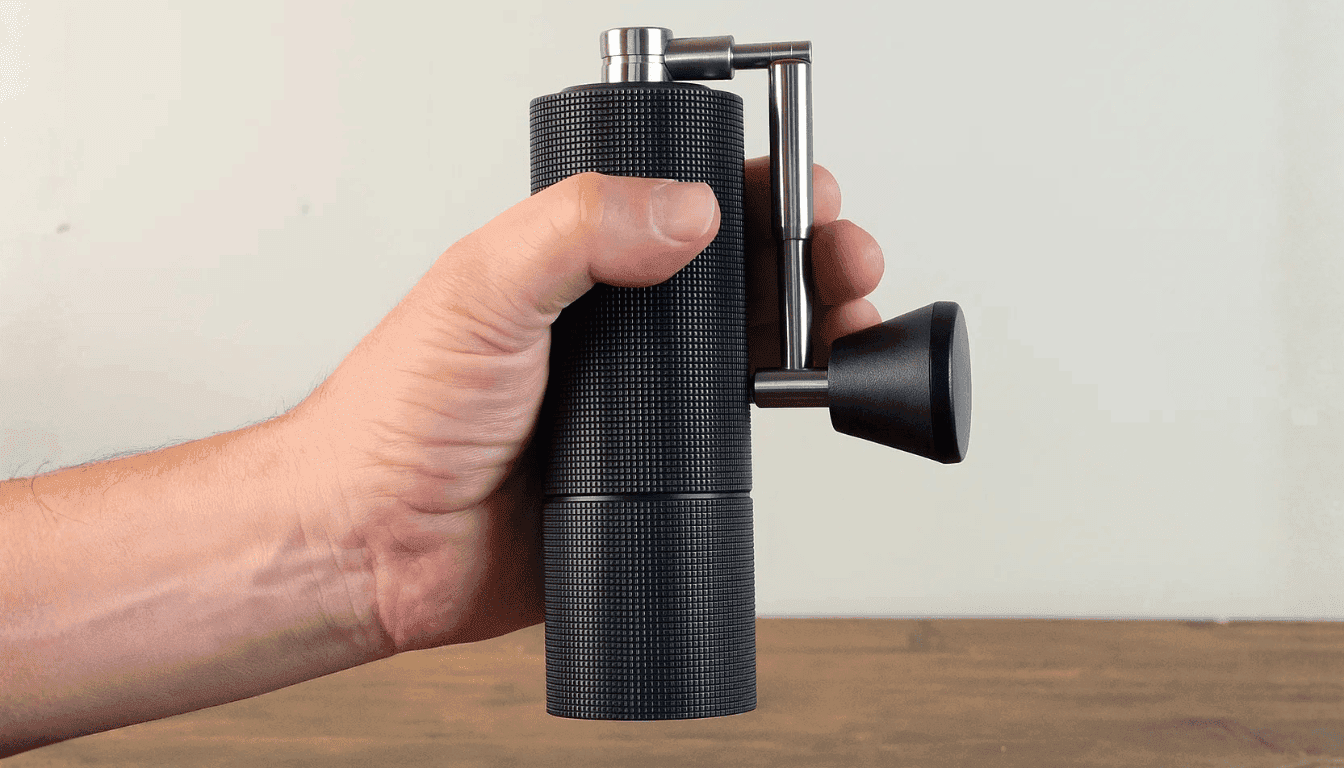
- Don’t overload it. Both grinders hold about 25 g of beans, which is perfect for a single brew. Overfilling can slow the grind and strain the mechanism.
- Warm up the burrs. Spin the handle a few times before adding beans. It helps the burrs settle and grind more evenly.
- Avoid forcing the handle. If the grinder feels stuck, back off a click or two rather than pushing harder. That small adjustment can save you from dulling or misaligning the burrs.
By combining regular maintenance with a little patience, both grinders will deliver consistent, reliable results for years.
Final Thoughts
Both the C3 and C2 have their strengths, but the Timemore C3 stands out in grind consistency. Timemore C2 and C3 are standout hand grinders for their price. The C2 is the dependable workhorse, while the C3 refines everything that made the original great.
If you’re just getting into manual brewing, the C2 is a fantastic start. If you already love brewing and want the next step up in consistency and control, the C3 is worth every cent.
Whichever you choose, you’re investing in something that elevates every cup you make.
Grinding fresh isn’t just about better coffee, it’s about taking a moment to slow down, enjoy the process, and taste the difference.