All products are independently selected by our editors. If you buy something, we may earn an affiliate commission. Learn More >
If you’ve ever stood at a coffee shop counter trying to decide between an iced americano and a cold brew, you’re not alone.
They look almost identical in the glass, but these two drinks are built completely differently, taste nothing alike, and suit very different kinds of coffee drinkers.
One is ready in under two minutes, pulled fresh through an espresso machine. The other asks you to plan ahead, steeping quietly in your fridge overnight.
Get the choice right and you’ll wonder how you ever ordered without thinking about it. Get it wrong and you’ll be staring at a cold cup that isn’t quite what you wanted.
Two Very Different Drinks, One Cold Glass
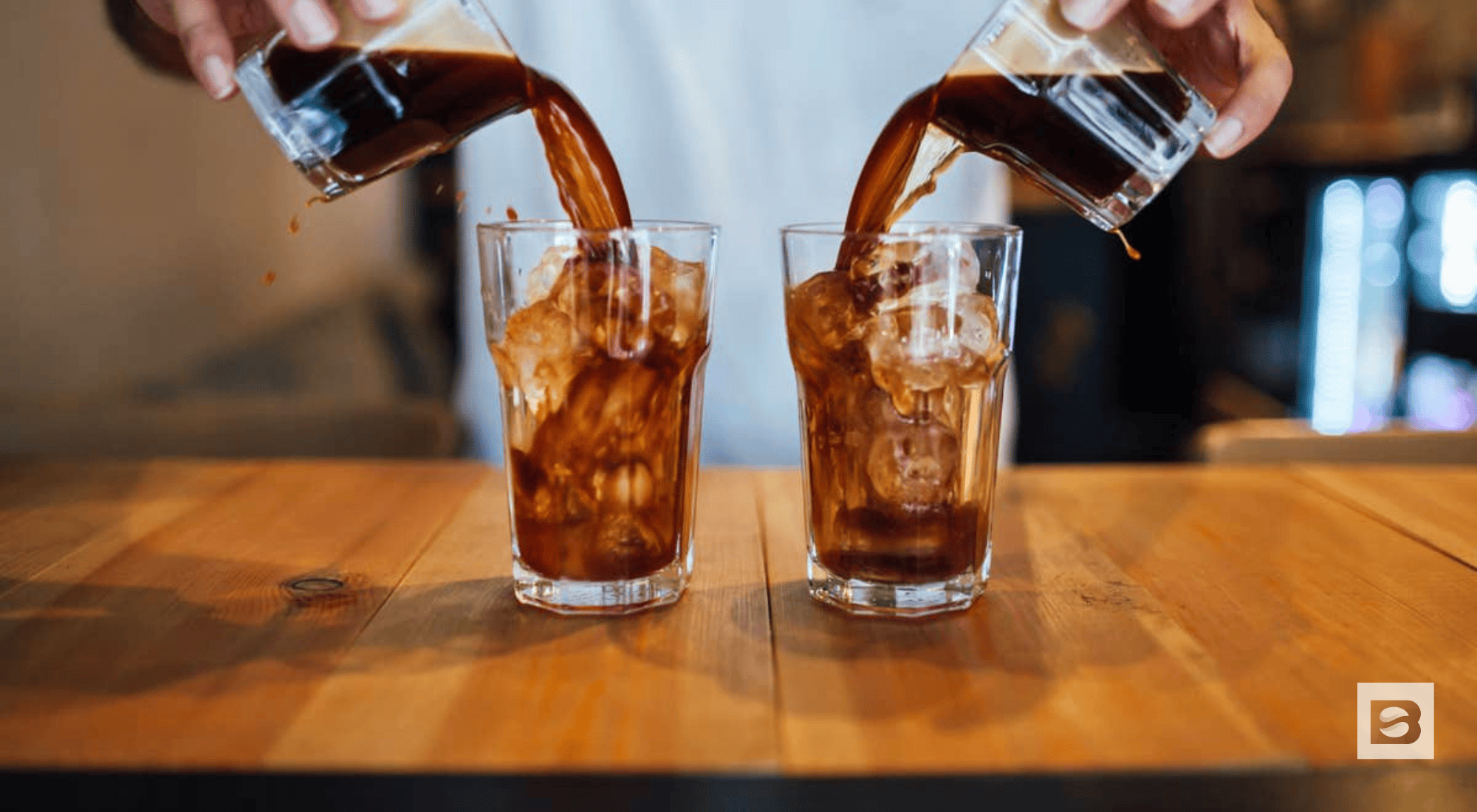
At a glance, cold brew and iced americano could pass for twins.
Both are dark, cold, and served over ice, making them popular options for refreshing iced coffee drinks. But the similarity stops there.
One is made in minutes using espresso and pressure. The other takes the better part of a day and needs nothing more than cold water and time.
Understanding how each one is made is the key to understanding why they taste so different.
How Each Coffee Is Made
The brewing process is where these two drinks really part ways. One takes a matter of minutes, the other takes most of the day, and that time difference shapes everything from flavor to texture to how you plan your morning.
What Goes Into an Iced Americano
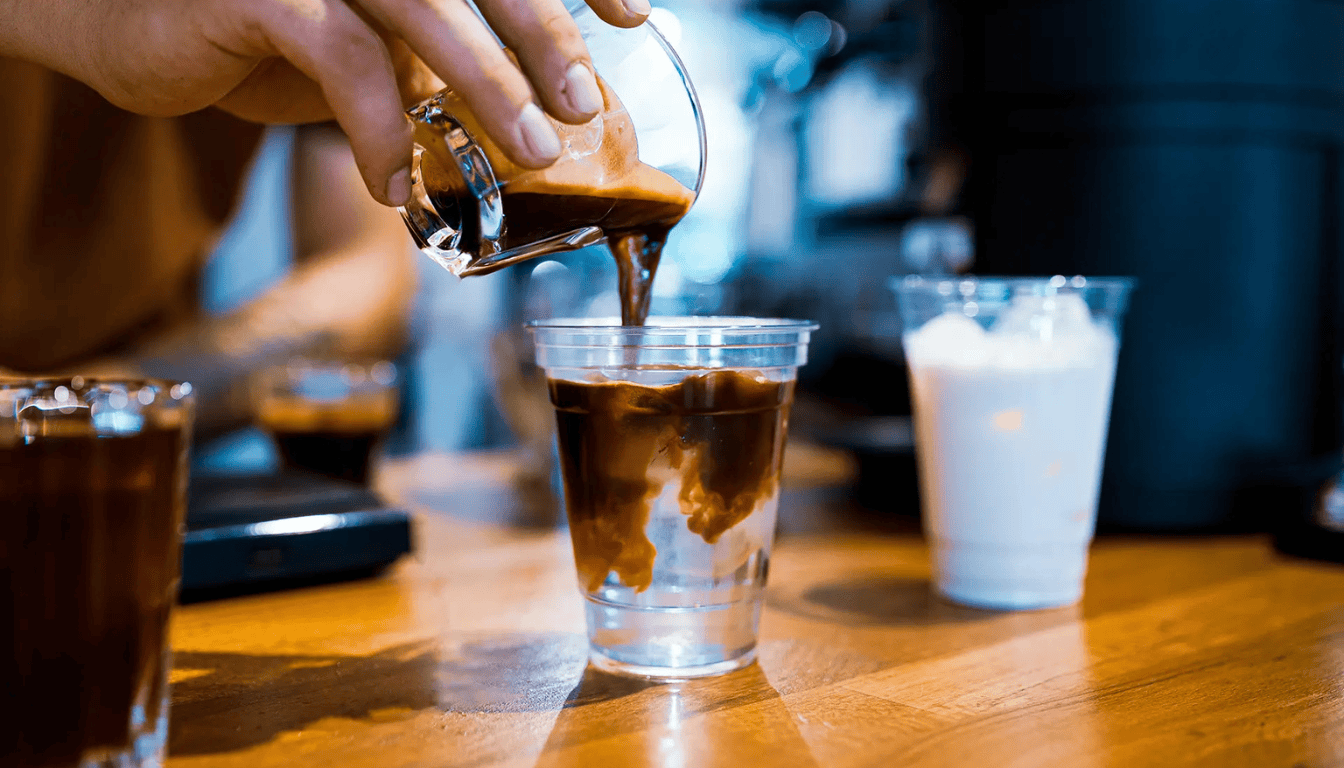
An iced americano starts with one or two shots of espresso, pulled fresh under high pressure, then poured over ice and topped with cold water.
Simple enough, but there’s a detail most people skip: the pour order matters.
If you add the espresso directly onto the ice first, the crema disperses quickly and the shot chills fast, giving you a brighter, cleaner cup. If you add cold water to the espresso before pouring over ice, you get a slightly softer dilution.
Neither is wrong, but they do taste different. Worth experimenting with at home.
What Goes Into Cold Brew
Cold brew is made by steeping coarsely ground coffee in cold water for anywhere between 12 and 24 hours, then filtering out the grounds.
The result is a smooth, low-acid concentrate that you dilute before serving, usually at a coffee-to-water ratio of around 1:1 or 1:2, depending on how strong you like it.
The coarse grind is important and it’s something a lot of guides gloss over. Finely ground coffee will over-extract during that long steep, turning your cold brew bitter and murky.
Think French press grind size and you’re on the right track.
The Flavor Difference (and Why It Happens)
This is where things get genuinely interesting.
The flavor gap between these two drinks comes down to one thing: heat and pressure versus time and cold water.
When you brew espresso, high pressure forces hot water through the coffee grounds in around 25 to 30 seconds. That rapid, intense extraction pulls soluble oils, aromatic compounds, and natural sugars into the shot quickly.
The result is a bright, layered, slightly sharp coffee flavor with the kind of crema-rich body you’d expect from a well-pulled espresso shot. Dilute that with cold water and ice, and you’ve got an iced americano: bold, lively, with a clean finish.
Cold brew works in the opposite direction.
There’s no heat, no pressure, and no rush. The slow extraction in cold water pulls fewer of the volatile aromatic compounds that give hot coffee its brightness, which is why cold brew tastes mellower, rounder, and far less acidic.
You lose some of the high notes, but you gain a smoothness that hot brewing can’t replicate.
So cold brew isn’t stronger in flavor, it’s just different. Smoother and darker toned, where an iced americano is sharper and more vivid.
Caffeine: Which One Hits Harder?
Here’s where a lot of comparisons go wrong.
You’ll see articles confidently stating that cold brew has 125mg of caffeine and an iced americano has 136mg, as though those numbers are fixed. They’re not.
A standard double-shot iced americano gives you roughly 120 to 140mg of caffeine, depending on the bean and how the shot is pulled.
Cold brew caffeine is far more variable. Because it’s made as a concentrate and then diluted, the caffeine in your final cup depends entirely on the coffee-to-water ratio you use when brewing, how long you steep it, and how much you dilute it before drinking.
Drink cold brew concentrate straight? You’re looking at a significantly higher caffeine hit. Dilute it generously? It may end up closer to, or even below, a standard iced americano.
The honest answer is that both drinks deliver a solid caffeine fix, but cold brew’s caffeine content is harder to pin down without knowing exactly how it was made.
Which Roast Works Best for Each?
Most posts treat coffee beans as interchangeable here, but roast choice makes a real difference to the finished drink. Getting this right is one of the simplest ways to improve your cold coffee at home.
For cold brew, a medium roast is your friend. The slow steep brings out the more delicate fruity and floral notes in medium roasts that can get lost in hot brewing.
Go too dark and those subtle characteristics disappear, leaving you with a flat, one-dimensional cup.
For an iced americano, a medium-dark roast holds up better. The pressure extraction and the cold water dilution can make lighter roasts taste thin or sour in the glass.
Medium-dark roasts bring out caramel and chocolate tones that stay present even when chilled and diluted.
Volcanica Coffee Lover Gift Box
The perfect gift box for the average avid coffee drinker, this gift box includes the best-selling products all in one package. Explore the taste of favorite coffees from around the world from the comfort of home.
Can You Make Them at Home?
One of the most common questions I get is which of these drinks is easier to pull off without a professional setup.
The good news is that both are very doable at home, though they call for different equipment and different amounts of patience.
Cold brew is the simpler of the two.
You don’t need any special equipment. A large jar, coarsely ground coffee, cold water, and a fine mesh strainer or paper filter is all it takes. Steep overnight in the fridge, strain in the morning, and you’ve got a batch of cold brew coffee that keeps for up to two weeks.
An iced Americano does require a way to pull espresso. An espresso machine is the obvious choice, but a moka pot or an AeroPress can get you close enough.
Neither produces true espresso in the technical sense, but both make a concentrated brew that works well with cold water and ice.
If you’re working with a Moka pot, use slightly less water than usual to keep the concentration up before diluting.
Cold Brew vs Iced Americano: Which One Should You Choose?
This is the question most comparison posts dance around, so I’ll give you a straight answer.
The right drink comes down to what you want from your cold coffee and how much time you’re willing to put in.
If you want something smooth, low-acid, and easy to sip slowly, cold brew is the better choice. It’s forgiving, it batch-brews easily, and it’s gentler on the stomach. It’s also the better pick if you don’t own any espresso equipment.
If you want something brighter, more complex, and closer to the coffee experience you’d get in a good café, go for the iced americano.
It’s ready in a few minutes, the flavor is more layered, and the espresso base gives it a character that cold brew simply can’t replicate.
As for whether cold brew is better than iced coffee in general? It depends on what you’re after.
Cold brew wins on smoothness and prep ease.
The iced americano wins on flavor complexity and speed. Neither is objectively better; it depends on your preference for iced Americanos or cold brew coffee. They’re just built for different moments and different palates.


Final Thoughts
The cold brew vs iced americano debate doesn’t need a definitive winner. Both are genuinely great cold coffee drinks, and both deserve a place in your routine.
If I had to pick just one for a slow Sunday morning with a batch already sitting in the fridge, I’d reach for the cold brew. If I’m after something sharp and fresh on a busy weekday, the iced americano wins every time.
Try both, pay attention to the roast you’re using, and you’ll figure out which one suits you pretty quickly.